

The searing commentary that finds common ground between the show Poacher (2024) and the new Hindi show Raakh is clear as night and day. While elephants were hunted in one, young children are in the other. The hunters remain morally skewed, even while being on the run – with the subtext forming an evolution of crime that does not distinguish between animals and humans. And it says a lot about the setting of the capital city of India that has transformed over the years. In a scene, you witness a character exclaiming on how Delhi was once home to deers and other animals, only for them to be either killed or driven away, even as humans would go onto take the mantle of ruthless animals. It tells you everything that is wrong about the city – a meta-reference on how an entire franchise is built on its crimes (read: Delhi Crimes).
But even in that context, the drama here almost acts as an origin story of a city that would soon earn a reputation of being the crime capital city of the country – a setting that is witness to lewd comments about the price of women being equated to a plate of Biryani to the gruesome crimes of Nirbhaya that made headlines without making any heads roll from the point of view of the authorities. And to trace it down to a palpable case of double homicide in 1978 – the infamous Ranga-Billa case, made me actual realise that that the crime threat has always been home grown, even as the focus always remains across the border. And the irony being – both these individuals weren’t locals of Delhi while only visiting the city for a quick crime binge.
Written by Anusha Nandakumar, Sandeep Saket, Ayush Trivedi, Renuka Dixit, and Hussain Haidry, Raakh has the seeds of a terrifying cold open – two children asking for lift only for you to fear the worst, until nothing happens. It is a specific tease that would go onto act as a foreshadow for the actual gruesome crime that would be stitched together as a jigsaw puzzle in the narrative. But it is also reflective of the times when perhaps the degree of crime wasn’t as brutal before the said incident, even as the eventually disappearance (and later murder) of the children is intercut with the origin story of two characters – Babu (Akash Makhija) and Rajjo (Ramandeep Yadav).
There is an immediate nod to the show Black Warrant, with the events of this show acting as a precursor to it. And through the petty crimes of robbery, you get a glimpse into the psyche of the two characters. Babu remains the ruthless aggressor, an alpha-male who previously committed a murder even as a child, given how the victim had made a complaint against him to the school principal and his mother. In that sense, he is more adventurous, always pushing the envelope on the nature of the crime – all with an intention to earn money and (hopefully) settle his greed associated with it. He is quick to remind the characters around him on how they aren’t ‘male’ enough to commit crimes including murder, while having a deeper sense of rage tagged to his personality.
On the other hand, Rajjo has a conscience of morality at the start – almost refraining from Babu to commit a potential kidnapping, while also trying to save another young child from the murderous crutches of his partner-in-crime. But you slowly witness a sense of ‘alpha-ness’ creep up in his personality – so much so that he intends to prove his masculinity by trying to murder a stranger. This subtext of masculinity also extends closer to his home when he tries to force himself on his young niece – a pivotal moment on how Babu’s personality has taken over Rajjo.
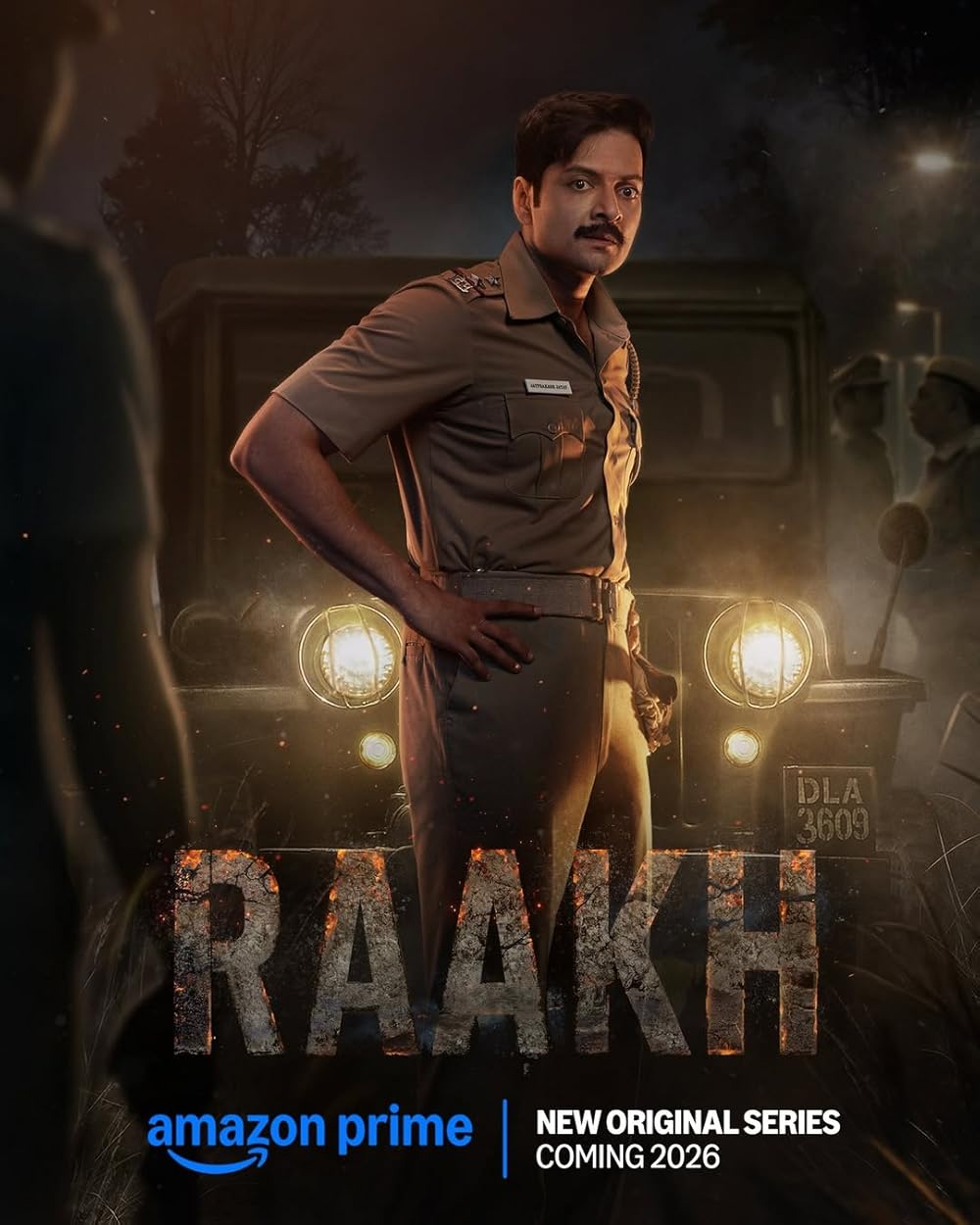
The soul of the ongoing investigation remains Jaiprakash (Ali Fazal), a lower caste officer studying for his civil examination until the high profile case of the missing children of the army officer falls in his lap. It is interesting on how a character at one point exclaims on how his name has ‘light’ (prakash) in it – almost acting as a contrasting thread to the glum (and rainy) setting of the city, and the grim circumstances of the police department. And while the latter is reflective through his dynamics with his senior who isn’t too keen for him to continue the investigation, his core dynamic is with respect to his father Ghanshyam (Rajesh Bedi), a retired constable who wishes to prepare curries in order to keep folks in the department happy. Perhaps, the curry here is a form of distraction to steer clear of the potential caste divide, something that is dissented by his son.
I liked how the setting of the drama in an era exudes of an interesting dynamic with respect to the institutions that we have today. For instance, the establishment of the then newly formed forensic department has the protagonist initially develop cold feet, before slowly warming up to the endless possibilities. At the same time, the pockets of crimes being committed are enough to send shivers down your spine – even when the trajectory largely remains linear.
The minor criticism for me remained the familiarity of the narrative, particularly after I was accustomed to the setting and the central plot. The linear trajectory after a point, didn’t exactly offer a sense of novelty. This, even as the subplots felt derivatives of other shows. For instance, the subplot involving grieving parents that felt like a derivative of Trial By Fire (2023). Or the idea of an investigative journalist scraping the surface of the crimes felt like a derivative of Sucheta Dalal in Scam 1992 (2020). Or the central plot of the manhunt also felt like the police procedural in Delhi Crime (2019).
That said, I liked the jigsawed representation of the central event – another nod to Trial By Fire in terms of its finale, something that had me dreading the inevitable. The entire unfolding of the central event after the conclusion of the manhunt, formed a deeper sense of retrospection – something that deeply psychological in nature. And a softening touch of an alternate ending remained a fitting final – a reminder on the state of affairs of the city in a crime-free alternate setup. It is enough to leave you pondering about the everyday crimes around us, not only in Delhi but elsewhere too – discreetly hoping that the victims would choose to run in the rain, appreciating its beauty rather than having to face the wrath of criminals on a rainy day. The screenplay is pretty well written and definitely leaves a mark.
The dialogues have an authentic outlook with regards to the setting in play – even though the subtle instances of spoonfeeding the viewers act like the thorns in the flesh. The BGM feels like a ticking time-bomb, heightening the tension in the drama with dollops of intrigue – although a part of me did feel that it was marginally overused at the start. But the impact was definitely in play. The cinematography comprises of frames that play well with the nature of the surroundings. For instance in a lead up to the discovery of the bodies at the start, the use of rain almost acts as a ominous sign that foreshadows the eventual event rather well. Also, the emotional core of the characters are ably maintained through its frames that allow you to stay abreast with their individual journeys.
The editing pattern could have been a touch sharper given how the familiarity of the plot slightly stalls the narrative in the second act. That said, the emotional core of the characters is not compromised, while wonderfully being transmitted from one scene to another, and from one event to another. Directors Prosit Roy, Anusha Nandakumar and Sandeep Saket ably control the proceedings within the vicinity of the true crime genre. There is definitely purpose to the world building, almost christening it as a palpable Shakespearean tragedy while creating an interesting bunch of characters to cater to the template of good versus evil. Yes, the minor falter lies in the familiarity of the linear narrative style, but the events remain gripping and intriguing – even as the direction fuels these traits rather well.
The performances are pretty good by the members of the cast. The likes of Davindar Gill as Chattan Singh and Raj Sharma as Dashrath Mishra have their moments to shine, often acting as a perfect foil for the protagonist. Divya Sharma as Suman and Vivaan Sharma as Sahil are outstanding to the core, accounting for a range of emotions ranging from naivety to resilience, evoking a strong sense of empathy particularly towards the end – something that stays with you long after the end credits roll. Naina Sareen, Kalyanee Mulay, and Pallavi Jadhao have pivotal little set-pieces that are key to shaping up the personality of the characters, and each of them are commendable to witness here. Saurabh Nayyar as Hariom and Baharul Islam as Dr Biswajit are pretty sincere and earnest with their performances, and both of them manage to leave a mark.
Mukund Pal as Pyaare Mohan laces his character with a subtext of masculinity, and he does a fine job here. Rrama Sharma as Bindiya exudes of innocence and naivety while accounting for a strong emotional core, marking another feather in her young but promising filmography. She was a treat to witness here. Namita Krishnamurthy as Meena does a commendable job as a character who is oblivious of the whereabouts of her lover who is a potent criminal.
Anshul Chauhan as Nisar (the hint of a subtext on her being a part of the minority yet being in a relationship with a man who wasn’t of her fate – tells you a thing or two about the India that was prevalent then) gets the mannerisms of her character spot on, while putting forth a restrained act. Rakesh Bedi as Ghanshyam is affable while putting forth another superb performance, forming a pivotal dynamic with the protagonist that establishes the subtext of identity. Dibyendu Bhattacharya as SP Indranil is understated and graceful in nature while delivering a dignified act – even in moments when he is flustered or agitated. Sonali Bendra as Mona and Aamir Bashir as Ashok form a palpable emotional hinge in the narrative, and their bouts of depression really forms the basis of its haunting premise, while raising the stakes in the narrative with their effortless acts.
Akash Makhija as Babu and Ramandeep Yadav as Rajjo are brilliant in every sense of the word. I liked how the two characters are almost mirror objects of each other on a scale of morality, while slowly merging to form a single brutal beast. There is a madness tagged to Akash, through his sinister eyes and his ruthless expressions that would send a shiver down your spine. Ramandeep on the other hand has a subtext of morality mixed with a skewed sense of masculinity, the latter acting as his weakness to transform himself into a murderous beast. Both of them will make your blood boil, which means that they are excellent to witness here.
Ali Fazal as Jaiprakash is the soul of the drama that carries the narrative with a sense of moral responsibility. You see him being deftly marginalized at work, even as the light in him wants to keep the fight alive. There is a whiff of sincerity that drives his character, having a clear thought behind what is right and what is wrong, even while staying focused on his duty. The subtle subtext of his identity also acts as a driving force in wanting to prove his mettle beyond a personnel who may have got the job because of a ‘ caste reservation’. These complex emotions are wonderfully accounted for by Ali in a solid act, while putting forth a superb performance.
Featuring solid performances, the first season of Raakh is a gripping true crime drama. It balances a deep emotional core and a haunting setting with restraint, making it a wonderful watch despite its familiarity. Available on Amazon Prime.


