

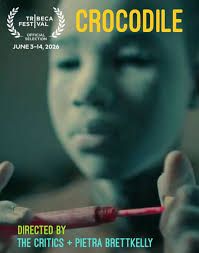
The film Crocodile can immediately be termed as a companion piece to Supermen Of Malegaon (2007), wherein the parallels of the histrionics of filmmaking in a small village acts as a connecting thread. So when you are introduced to a group of youngsters going by the name The Critics, the surroundings of Kaduna in Nigeria play an important part in them wanting to opt for making films. For most of them, it is a form of escapism – from their sorrows, the politics of the land, and their love for films, that prompts them to opt for an unusual life. In a way, this forms the basis of the drama with a handful artists at the helm of things, joining forces to create some amazing ‘low-budget’ sci-fi movies, much like the Superboys of Malegaon referencing older Hindi films to create cinema of their own. It is another reminder on the power of cinema in its purest form – catering and fuelling the imagination of young minds, in order to create art that is not only a form of escapism for them, but also a form of unadulterated escapism for the viewers too.
Directed by Pietra Brettkelly and The Critics, the metaphor closely associated with the film Crocodile, is undeniably piercing. In a scene from the video project, you see the boys go on a quest to hunt the creatures – a home for the crocs in Nigeria. But despite that, the metaphor goes deeper – of creatures that are thick-skinned and known to survive, much like the boys in the vicinity. The documentary has all the ingredients of a coming-of-age underdog story – particularly given the setting of Nigeria which a character exclaims to be ‘a complicated country with regards to the law’. In a scene, you witness a moment involving the cops harassing the young minds – taking their camera in exchange for a bribe. You also witness scenes of police brutality with mobsters being fired upon, for going againat the government. The fabric of the world is skewed by politics, even while housing a million dreams of a handful of ‘aspiring filmmakers’.
The setting also includes the growing concerns of parents who don’t want their children to waste time in harbouring their dreams (hmmm, familiar story for most of us). But the issue isn’t cemented on them blindly opposing – it comes from a deeper concern of the future of their children within the confines of the growing tension of the surroundings, coupled with the quality of local films being made, something that would sum up their future.
And yet, the journey remains a heartwarming one to begin with – even as the imaginative films being produced are uploaded on youtube, that sees their audience base increasing. In a scene, you witness the seriousness of the characters involved – even as they discuss ways to shoot a complex action sequence. The key word remains their ‘seriousness’, something that propels even their videos to reach the creator of Star Wars – JJ Abrams, in a watershed moment for the group.
The trajectory of the documentary isn’t necessary coated to be a crowd-pleasing one, unlike Supermen Of Malegaon that just focused on the histrionics of filmmaking. The coming-of-age progression is dark and subtly disturbing, given how the collective conscience of the group remains compromised with age. The ambitions change, and so do the point of views – something that does take centerstage, along with darker themes of s*xual harassment and the difference in ambitions with regards to the characters. And while the ending is hopeful, there is a bittersweet taste to the proceedings that allows for a different dimension by the end of things.
The one minor criticism that I had was with respect to the tonal shift in the drama, that felt a little sudden – much like life. There wasn’t necessarily a foreshadow to prepare the viewers for a shift from the histrionics of filmmaking to a commentary on personal ambitions, or even deeper and darker themes of s*xual abuse. The transition was sudden – and something that would divide viewers to an extent. On a side note, I wished for the emphasis to be a little of the filmmaking techniques employed by the group of young boys in creating their pieces of art – something that intrigued me, even as I wished for the documentary to delve deeper in the techniques employed. And also given that the time period employed is 13 years, the editing pattern makes it marginally episodic with its shifting tones. But these are minor flaws in an otherwise solid documentary.
There is an unsaid beauty in the life of an artist that keeps him moving ahead in their tryst with cinema. This beauty often precedes their issues with regards to the survival, even at the cost of making them delusioned in the want to create art. You do see glimpses of that with the young minds here – using their artform as a mwans of escapism, something that explains their futuristic over-the-top tones employed in their videos. And despite the multiple issues being faced by the group, you don’t really see anyone quitting. This is purely due to their love for cinema, that precedes the idea of individual ambitions. In a way, they represent crocodiles that would probably be dwindling but are essentially survivors with thick skins – that would survive through various social issues erupting in the vicinity, and in their personal lives.
As part of our Tribeca Film Festival coverage, Crocodile stands out as a searing documentary that tackles the passion, ambition, and dreams of young amateur filmmakers in a bittersweet love letter to cinema.


