

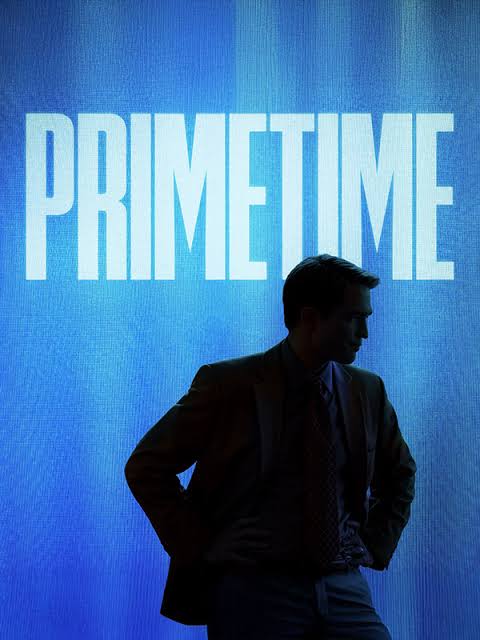
At one point in the new English film Primetime, the protagonist Chris Hansen (Robert Pattinson) narrates a story from his past to a character – the one involving a demon who was responsible for kidnapping children in Goa. It is interesting on how the protagonist in this moment uses the incident as a metaphor – equating the ancient ‘demon’ to the internet predators that he is trapping as a part of a controversial reality TV show ‘To Catch A Predator’. In his words, the act remains that of cleansing the world of an ancient evil, claiming on how those who have children would understand. There is a definite crusader streak inherent in the protagonist – the one that triggers his vigilante spirit from time to time. In an alternate world, he would be The Batman – protecting his city from the sins of the underbelly; but in reality, Chris remains a distant cousin of Louis Bloom from Nightcrawler (2014) – often blinded by his own ambition, and willing to go an extra mile to manipulate and trap his “predators”, even before the legal system could step in to take its course.
Based on true incidents behind the controversial 2006 show ‘To Catch A Predator’, and written by Ajon Singh, Primetime offers a psychological edge to the proceedings right from its cold open, when one of the accused is lured into a kinky game with the ‘victim’, baited into a specific action, and caught red-handed in front of the camera – even as the protagonist Chris enters the arena to arm-twist, and give a lecture on morality before having the accused arrested. The pattern is simple but deeply disturbing – a potential network of victims posing as adolescent boys and girls on the internet to lure the predators out of their caves, before allowing the protagonist to be a vigilante.
The subtext though remains that of skewing the fabric of morality – the one wherein the idea remains that of sensationalism to highlight the societal evils; a form of a media trial that builds its foundation on shock rather than a proven procedural of law. And the edginess is mounted on a different form of voyeurism that is centered around viewership and TRPs, as opposed to the course of law having its say. The same is established in a particular scene wherein the protagonist is driven by the obsession to dethrone a rival network’s popular show Lost, with his own reality TV show on Primetime – a pivotal plot point that sees him push the boundaries of manipulation to a whole new level!
<span;>This, even as justice is viewed as a high-performing spectacle rather than a process of improving the society!
The writing offers a world of contrasts between the hunters and the predators – each of whom could be interchanged at any given point. For instance, the morality of the protagonist is skewed – having a discreet affair with a woman outside his marriage, even while hell-bent on cleansing the evils of the society on moralistic grounds. Likewise, a fleeting subplot involving the producer Andie Bender (Meritt Wever) being pursued and poached for a rival television network is established – only for her to reject the offer on moral grounds; an irony of sorts given how her participation in a show itself blurs the boundaries of morality. The only vulnerable character in the fray remains that of Dan Plumb (Skyler Gisondo), a struggling actor who gets to showcase his acting chops while having to pose as an adolescent teen on the show, all in order to lure his victims.
The proceedings unfold like a psychological horror film – a trait that represents the chaotic yet narcissistic psyche of the protagonist. It is interesting on how this trait of his is used to weaponize an important cause of child abuse, so much so that he would invariably become a part of his own reality TV show. The hoopla is similar to the growing media circus that resonates with today’s times, wherein every statement is a bid to raise the TRP – even at the cost of villifying individuals while labelling them as crusaders. If the bait isn’t taken, the pursue continues to be relentless – similar to a specific subplot wherein the characters lay a bait for a potential ‘whale’; someone who would raise the bar of their TV show, both in terms of popularity and TRP.
The events in the final act unfold like a simmering Shakespearean tragedy playing out in the form of a searing horror film. The rainy surroundings form an active metaphor for the chaotic psyche of the protagonist who would stop at nothing in order to pursue his ambition of fame and money, masking a good cause for his own benefit, and in the process compromising on his morality. And when the even tragedy does take place in the wake of loneliness and solitude, even when the trap is relentlessly laid for abuse; it becomes a classic plot point of evil posing as a plague, and eventually surmounting everyone in question.
The ending also made me ponder on the ethics of a sting operation; an uncomfortable truth that would essentially involve using voyeurism as a weapon to pin down an individual; using morality as a facade for TRP and popularity. And in the process, it was pivotal in highlighting an ambitious arc of the protagonist that remained dark and deeply unsettling – essentially giving an impression of Chris being consumed by the very evil he was fighting against. It may have been ‘Showtime’ for him with an intention of using a specific disturbing footage, but at what cost? The arc refused to offer any redemption, instead unfolding as a cold and detached mirror of an individual that was deep down the rabbit hole of corruption. The screenplay is brilliantly penned, while offering different shades of horror along the way.
The dialogues offer a chilling outlook to the drama, in a rather relentless manner that makes for an uncomfortable and unsettling watch. The themes of morality are deliberately skewed with lines such as ‘What Would Have Happened If I Wasn’t There?’, a classic case of the boundaries being blurred. The BGM is deftly haunting, creating a disturbing ambience of fear that isn’t conventional in any shape or form – often elevating the disturbing psychological levels of the characters in their pursue of ‘justice’. It is a very specific sentiment that transitions from a satire to a horror, ably backed by a resounding score!
The cinematography comprises of frames that are grainy, often resembling the times of the early 2000s. But a deeper subtext is reserved for the pixelated characters who form only fragments of themselves while contributing to the overall concept of justice. It is interesting on also how the frames utilize shades of grey and blue hues over the course of multiple scenes – a specific trait of stripping away the drama off any human vibrancy and emotions, instead offering a bleak outlook to the proceedings – a direct reflection of morality with regards to the characters.
The editing pattern is crisp, often mirroring the fiercely chaotic world of the drama, with a specific quality of transitioning the proceedings from a satire to a psychological horror film. Tje fast cuts are used with an intention to strip off the characters of their morality, while creating a bleak and flawed world for them to thrive in.
Director Lance Oppenheim showcases some staggering skills, brilliantly subverting American subcultures, and in the process creating a vivid outlook to the chaotic world that he constructs. He utilizes a bold aesthetic and a sharp cinematic language to craft a gripping, thought-provoking examination of media ethics and moral ambition, often veering into a psychological horror space that is chilling and disturbing in equal measure. His idea of leaning into a surrealist, fever-dream atmosphere is commendable, making this one of the most impressive directorial ventures of the year.
The performances are wonderful by the members of the cast. Phoebe Bridgers as Del, Bokeem Woodbine as Cortland Gunn, and Matthew Maher as Xavier are important cogs in the narrative, and each of them have their moments to shine. Alex Winter as Bill and Michael Chachere blur the generic sentiments around the predators, by acts that are layered and often bordering on loneliness and solitude – creating an aura of tragedy around their respective performances.
Skyler Gisondo as Dan Plumb commands the screen with a heartbreaking breakdown of naive desperation. Stepping into the shoes of the operation’s youthful decoy, he maps a harrowing emotional trajectory from wide-eyed Hollywood ambition to paralyzing, inescapable panic as the sting spins wildly out of his control.
Merritt Wever as Andie Bender acts as the vital, grounded outlook to the film’s chaotic energy. Her calculated portrayal of the television producer exposes a cold, career-minded pragmatism, meticulously peeling back the layer of professional integrity to reveal a ruthless preoccupation with ratings over human cost.
Robert Pattinson as Chris Hansen delivers a riveting performance, trading standard biopic imitation for a deeply stylized masterclass in psychological disintegration. He handles the character’s descent into ego-driven mania with an intense physical commitment, channeling a disquieting blend of television charisma and parasitic hunger for screen dominance. His trait of a dysfunctioning vigilante is worth a million nightmares, offering a streak of horror that is terrifying through yet another memorable act this year!
Primetime is a riveting satire on the media circus that seamlessly blurs the boundaries of morality, delivering a deeply unsettling experience that is impossible to shake off. Packed with streaks of psychological horror, the narrative infuses chilling undertones blended in its dark themes, while outstanding performances elevate the drama’s overall stature. By forcing viewers to confront deeply uncomfortable questions about modern sensationalism, the film cements itself as both a disturbing and brilliant drama – one that will linger in your mind long after the final credits roll. Available in a theatre near you, and Highly Recommended!


