
We all know of people in our lives who are good-hearted and want to make a difference to the world through their antics. But unfortunately, their antics itself are so annoying that no one really cares about their good-heart. The new English film The Cat In The Hat is one of their clan, a glimpse of which you get at the very beginning. For starters, this is a kids film – except that the kids may not fully be onboard beyond the glitters on the screen that boast of a vivid imagination. In a scene at the start, you are introduced to ‘The Cat’ (Bill Hader) who is tasked with putting a smile on the faces of two kids who are deeply submerged in their phones – a nice little expression depicted through a monochrome. But before the screen transitions into a vibrant, colourful frame laced with surges of fire – you do get a glimpse of the chief characteristic of the protagonist; to spread joy and happiness at all costs, even if it were to spell doom for its mess-o-meter.
The latter is an appraisal metric for him that has to be at the lowest minimum, and the ‘expression’ metric at its happiest possible for the protagonist to continue to retain his job. This little phase increasingly reminded me of my own corporate journey that was laced with turmoil (a broader commentary on the insipid corporate life), except that I couldn’t deny on how the protagonist did come across as annoying (although with good intentions) – hardly surprised at his clash with his boss Mr Hoogeboom (Giancarlo Esposita), while having the local HR director Sherri (Quinta Brunson) by his side. And much like the traits of the protagonist, the drama is well-intentioned but all too messy for my liking!
Based on the 1957 children’s book by Dr Seuss, and written by Erica Rivinoja and Alessandro Carloni, The Cat In The Hat could so easily have been a heartwarming holiday film, centered around a Disney-esque theme of ‘lost and found’, wherein relationships would be mounted on memories, and character arcs would be laced with redemption and a bout of realisation. To be honest, there is a streak of the inherent Disney theme when the setting changes to a modest household with the characters of Gabby (Xochitl Gomez) and her little brother Sebastian (Tiago Martinez). You can immediately equate the character of Gabby to the protagonist in Disney’s Inside Out (2015); of having to shift towns and start a new life, even as her mother is a nurse and mostly away! And it is left to ‘The Cat’ to put a smile on their faces whilst boasting of a second life – the last one before he is fired, while tactfully sneaking out a Go-Backer stopwatch to correct his past. The catch being that Gabby wants to use it to go back to her hometown too.
The issue with the writing remains on how it wishes to trade simple, palatable emotions for kids and adults with an overcrowded, vividly imaginative narrative that drowns most of the emotions in the drama. It is like that one uncle at a wedding who thinks he is funny, but only brings about crickets in a room full of people with his lame jokes. Or a book that is so overhyped, that when you actually get to it – it turns out to be largely underwhelming.
Most of the writing is dedicated to each of the three cartons – one of which holds the misplaced Go-Backer stopwatch, a key to the past and future of the characters involved. And the imagination takes you to a sea circus that houses one of the few funny scenes involving a little Goldfish Waffles (Matt Berry) – a 40 second ‘silent’ shot of it hilariously swimming from one side of the screen to another in slow-mo! But these moments are rare, often drowned in the high-pitch humour that doesn’t keep the emotions floating in the sea for too long, metaphorically and literally speaking!
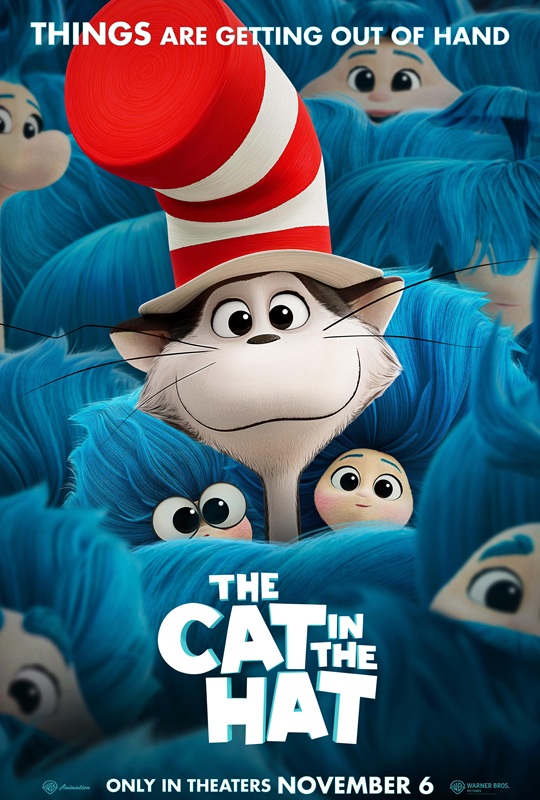
The drama also traverses into untapped territory, even as the protagonist accompanies Gabby through her visceral memories to her hometown – an entry that is celebrated by a walking band. I did understand the motive of the writing here, using the medium of the carton to trigger a whiff of nostalgia. But these emotions aren’t allowed to stay in the moment, even as the writing shifts its focus on Sebastian and Waffles who encounter some furry, body-tapping beings called ‘Things’ – a thematic-derivative companion beings to the Minions (and there is a legit mention of a meta spin-off movie).
There is also a mystery involving another being called ‘Something’ that is targetting the watch, shrouded in a narrative that also wishes to tap into a set of emotions involving the past of Gabby’s mother. You sense the familiar beats of the narrative, while wishing to indulge in them – but the emotions never fully land the way the writers may have wished to on paper. The issue continues to be a jarringly overcrowded narrative that oscillates between a speck of emotions and a searing monster that doubles up as an intimidating antagonist in a film out of nowhere. This also felt like a structural flaw given how there was no mention of a monster in the first half of a film, seemingly finding its way in the narrative through a creative block. There is also a subplot of a landlady who hates having pets around her, in a resolution that felt a little misplaced in the narrative.
To be fair, you do get a hint of emotions in the final act when the cluttered narrative begins to settle down. It is a familiar resolution that is aimed at weaponizing the fuzzy feeling, with simpler solutions mixed with steady bouts of humour that is a nod to several Disney films that we have witnessed till date. And I really don’t mind that, except that such Disney films offer a connecting set of emotions right from the start – as opposed to a muddled and jerky narrative here that is riddled with several bouts of annoyance. In other words, the screenplay has its moments towards the end but it wasn’t enough to completely engage with me, and keep me attuned to the emotional core of the drama.
The dialogues are laced with humour that are positioned at such a high-pitch, that all the emotions in the vicinity drown. Some streaks of humour does land but that isn’t saying much here. The music and BGM are playful, and whilst they add a sense of vibrancy to the proceedings, the softer notes enunciating the underlying emotional core of the drama is missing. And in that sense, the BGM definitely needed to be better. The computer-generated animation is astounding, and it continued to be the strongest pillar of the film – with eye-popping and vibrant colour-grading that cut through the chaotic outlook of the proceedings. The editing pattern offers some seamless transitions, but there are some lags sprinkled along the way that really needed to be ironed out on the editing table. Some sequences are stretched to a point of no return, wobbling the narrative further – something that made me frequently disconnected with the proceedings.
Directors Erica Rivinoja and Alessandro Carloni craft a visually dazzling spectacle brimming with stylistic imagination and distinct, multi-textured worlds. However, their direction ultimately fails to leave a lasting mark, as the film continuously struggles to fully tap into its underlying emotional core. By packaging what should be a grounded, heartfelt drama about sibling displacement into a relentless, high-pitched comedy, the narrative stakes are drowned out by loud, hyperactive chaos. In other words, the direction is more of a miss than a hit.
The voiceovers are a mixed bag by the members of the ensemble cast. Thomas Middleditch as Thing One has his moments to shine. Quinta Brunson as Sherrie, Paula Pell as Patty, and Giancarlo Esposito as Mr Hoogeboom are clearly having fun with their respective characters, and both of them are impressive here. Matt Berry as Waffle the goldfish is delightful to witness here, and his voiceover remains consistently ticklish here. Tiago Martinez as Sebastian is decent but nothing much to write home about, given his one-note characteristics from a writing stand-point. Xochitl Gomez as Gabby doesn’t do enough to land emotions through her voiceover, particularly given how her character was pivotal to emotionally anchoring the drama here. Bill Hader as The Cat In The Hat suffers from a high-pitched comedic tone that doesn’t allow any other sentiments to creep into his persona, often coming across as an energetic but annoying character. The humour lands in parts, but again, that isn’t saying much.
While The Cat In The Hat delivers a visually dazzling spectacle filled with vibrant aesthetics, it is severely weighed down by insipid, high-pitched humor and an overstuffed plot that completely strip away the story’s emotional core. The film trades the whimsical charm of the original source material for manic energy and cheap gags. Because these comedic attempts are far more of a miss than a hit, the narrative fails to build any meaningful stakes, thereby sinking the film in a sea of mediocrity and scoring high on the mess-o-meter. Available in a theatre near you (from 5th November’26 onwards).


