
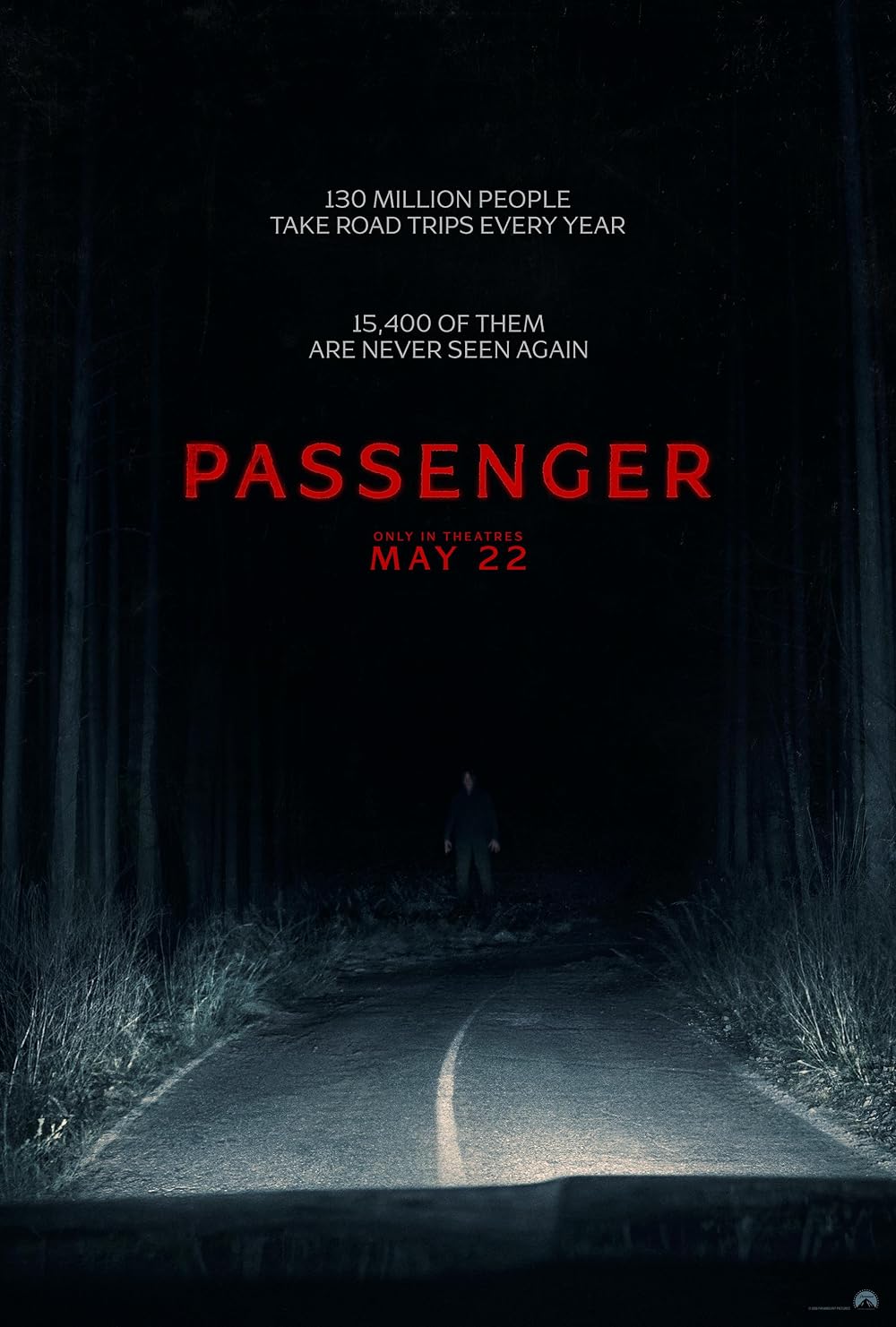
I don’t get to say this everyday but the trailer of the new English film Passenger was way better than the entire film. As a part of its cold open (a sequence that is essentially the entire trailer), you witness a couple of characters traversing through the night in a car – a setting that immediately demanded your attention. An unhinged banter and an unscheduled break later – the scenario changes with one character witnessing another character being possessed and killed off on the dashboard. This, before being possessed himself. It remained an assured start to kickstart the urban legend that reminded me of yesteryear’s films like I Know What You Did Last Summer (1997) – with the masked killer being replaced by a supernatural entity, something that automatically makes it stronger. But sadly from this point, the drama slides and slides and slides into something so generic and predictable slop (my favourite word these days), that it left me scratching on how was this script even approved. In times of horror films like Obsession (2026) or Weapons (2025), where does this B-grade flick fit, really?
Written by T. W. Burgess and Zachary Donohue, Passenger can essentially be classified as a road movie given how the two protagonists of the film – Maddie (Lou Llobell) and Tyler (Jacob Scipio) decide to live the Van life. This basically means hitting the road and living on it, through their caravan – something that supposedly would bring the couple closer. She is six weeks pregnant wanting a home, he is a free bird wanting a change of routine – but these clashing ideas are hardly a talking point in this rather generic horror film that offers nothing new. In fact, Passenger can be equated to yesteryear’s prolific horror director who refuses to adapt with shifting times while delivering a horror film catered to the sensibilities of his generation. Unfortunately, this is the year 2026 with horror being that one genre that has been subjected to maximum innovation!
The issue with the writing remained on how it couldn’t find the right balance between the dynamic of the couple, and the mythology behind the horror folklore. As a result, the thrills remain few and far between – even as more time is invested in exploring the gathering of van-lifers. It remains a very specific problem because the horror moments are inefficient, and designed to work only in isolation. So you will be witness to a stray incident on the highway that threatens to amp up the scares, but never fully commits to building an atmosphere of fear around it. Remember Hokum (2026) and how it managed to create a chilling ambience around the house? The caravan was that vessel here – something that could have resulted in bouts of claustrophobia, something that wasn’t to be.
The mythology behind the supposed folklore is so half-hearted, barely even relying on symbols to communicate the logical angle of things. All you get is a fleeting homage with one of the protagonists skimming through a book that she randomly stumbles upon at a book store. This, while coming on the back of a supposed terrifying incident at the parking lot that wasn’t captured on the dashcam. From a structural perspective, the focus needed to be right on the folklore from that point – but instead what you get are randomly curated cozy moments often interrupted by bouts of horror.
The reasoning will go down as a major point of criticism, particularly given how convenient the writing turns out to be with the symbolism of St Christopher medal that is the one for protection. You also begin to question on how does one of the characters know about the myth, and then why is she conveniently bumped off. It reminded me increasingly of the template employed by Vikram Bhatt in his horror films – an exposition is immediately followed by the death of a side character. This, before the mainstays would somehow find a way to survive and overpower the spirit. And the same sequence of events transpire here. Tch tch….we are in 2026 folks, you need to up your game!
The dialogues are surprisingly stripped off any emotions, something that remained puzzling given the emphasis on the dynamic between the protagonists. And in the same breath, it is needless to say that the horror quotient hardly is touched upon through the lines, barring the opening sequence. The BGM remains one of the stronger aspects of the drama, atleast trying its bit in elevating the horror quotient in the drama. But my fundamental issue remained on how the notes were designed for jumpscares, as opposed to creating an ambience of fear. The same holds true for the cinematography that never really gets close to the characters, while often relying on the sudden shock factor to deliver the scares. The spaces remain woefully underutilized, something that fails to create the tension.
The editing pattern is a little sloppy, being abrupt with the cuts – particularly towards the end of the film, while also never accounting for the lags in thr narrative. Director Andre Ovredal never fully taps into the horror quotient of the drama, while relying on far too standard (and substandard) tropes to amp the horror quotient. But even from a characterization and world-building POV, he isn’t fully able to tie the core emotions of the characters to the main plot while elevating its stakes. The direction completely falls flat by the end of things, and that just sums up the overall style too.
The performances aren’t great either, given how I remained unmoved by the antics of the artists here. While Miles Fowler as Lucas and Alan Trong as Daniel set the ball rolling fairly well at the start, Melissa Deo as Diana doesn’t fully get a chance to bloom given her sketchy characterization from the writing standpoint. Joseph Lopez as the Passenger is mildly intimidating but his presence just felt like an aftertaste, as opposed to being the wrecker-in-chief. Jacob Scipio as Tyler and Lou Llobell as Maddie aren’t fully able to elevate the emotional core of their dynamic, while never fully committing to the urgency of the drama without steering clear of the cliches. The impact just wasn’t there.
Passenger is a snooze-fest on wheels – a horror thriller so flat and generic that it fails to create an impact. And if the trailer of the film is better than the film itself, then it is a very big problem for me! Be sure to drive past this one! Available in a theatre near you.


