

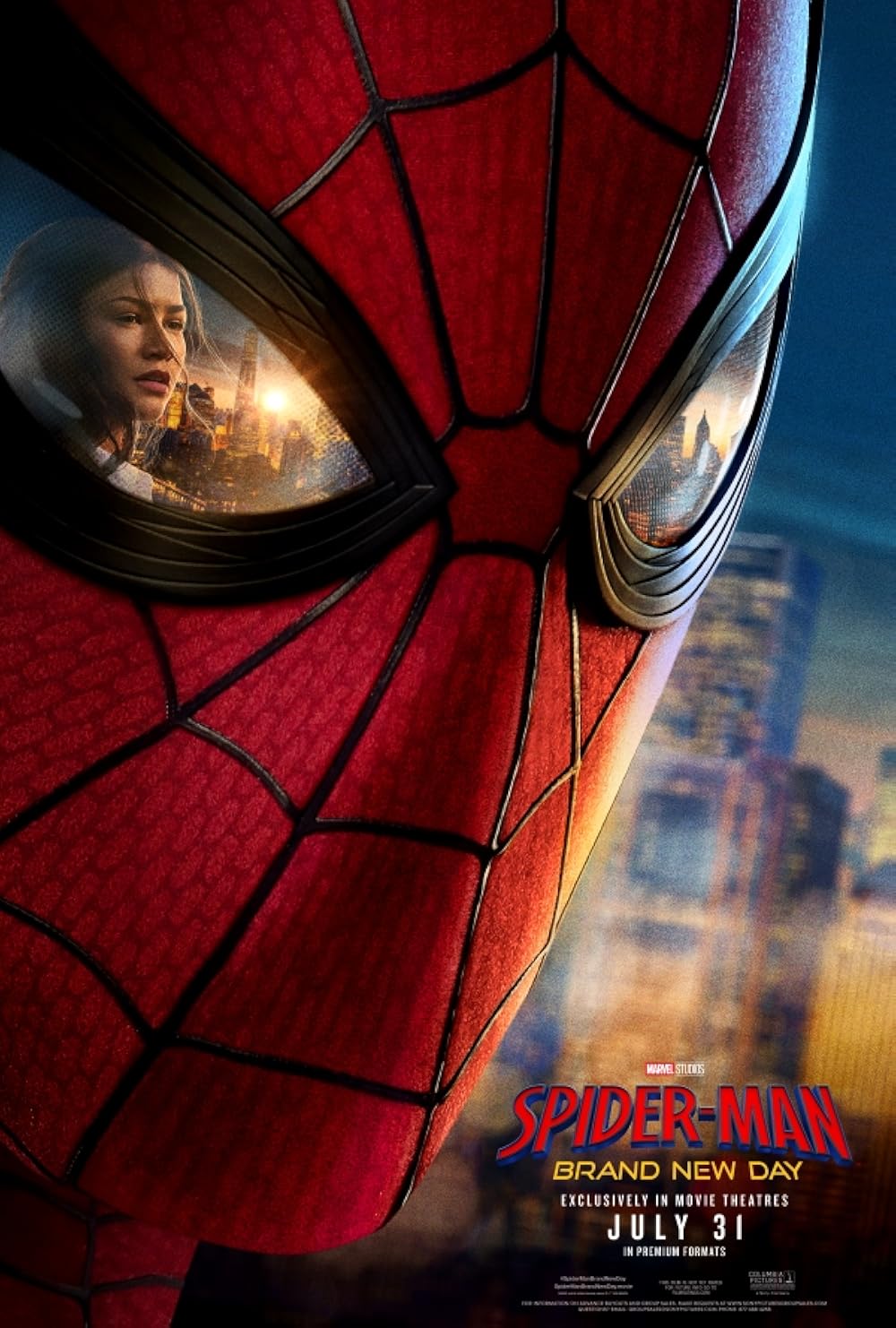
There was a line in The Odyssey (2026) that accurately summed up the plight of the protagonist – “The most we want is what the most we can’t have, and what the most we can’t have is what we already have and lost”. Ironically, this very line is a searing companion piece to Peter Parker (Tom Holland) in the English film Spider-Man: Brand New Day. You notice the chinks in his ’emotional’ armoury right at the start – blankly staring at a vlog involving his bestie Ned (Jacob Batalon) and the love of his life MJ (Zendaya) spending their time in MIT – even while he is missing out on the fun. Clearly after the events of the last film, they don’t have any memory of the protagonist, who is further wrapped up in a blanket of depression following the demise of his aunt May. The conflict here remains internal – the one of identity of having to live the glamorous life of a superhero under an alias, while the real Peter remains isolated and edgy – often hidden and anonymous to the world.
Written by Erik Sommers and Chris McKenna, Spiderman: Brand New Day uses the setting of the hustling and bustling city of New York to its absolute advantage. It remains a very specific setting of tall skyscrapers and symmetric roads being witness to the trippy mid-air acrobatics of their local superhero, while also silently withholding his vulnerability. For the protagonist, fighting crime becomes a form of escapism from his deepest moments of emotional unstability, something that he chooses to address on his own. For instance, you only get a fleeting glimpse inside his mind – seeing him seated with his Aunt May, before his thoughts are functionally paused in the wake of the issues of the outer world. This immediately remains the deconstructed take of a superhero – almost intended to be viewed as brave, without having any scope of vulnerability. In that sense, this is a rough coming-of-age story for the protagonist who slowly has to come to terms with his pain and grief.
Like Thunderbolts* (2025), the antagonist of this film remains ambigious – a mysterious ‘transfer of thoughts’ owing to the phenomena of brain-hopping that plagues the city of New York. This remains a fascinating undercurrent given its unpredictability, but also with regards to a deeper subtext involving the power of thoughts – wherein a powerful thought has the ability to be transferred from one individual to another. You often see glimpses of the antagonist(s) here in the form of Scorpion, or a supposed capitalist organization called ‘Damage Control’, or even the mention of ‘V-Max’ – an alleged weapon that adds to the mystery around the drama, all packaged in a wild goosechase. But the actual person in question is much simpler and complex in equal measures, with shades of telepathy explored along the way.
It is ironic on how the characters around the protagonist mirror his psychological status. For Ned, it is more about the identity of the man behind the mask, as opposed to a celebration of a superhero – a contrasting yet similar trait that deviates from his once-upon-a-time friendship with the protagonist. For MJ, it remains about distant memories of dating Spiderman without having any memory of the man behind the mask – an immediate companion piece to the Sheep in The Sheep Detectives (2026) who don’t have any memory, and hence no real trauma to boast of. Ironically, it is the protagonist that is steadily declining his mental psyche – indicative of the organic webbing that finds its significance, a gooey version of the webbing produced by him as opposed to his suit that is a sign of stress. This, whilst he chooses to continue to hide behind the mask to conceal his identity.
The parallels with regards to his character don’t end here too. Even his new-found buddy Frank (Jon Bernthal) aka The Punisher remains an alternate version of the protagonist, with the exception that he has lost his ability to love and care. He remains a searing reminder on what Parker who transpire to be, if his detachment from emotions would continue. Elsewhere, another character Jean (Sadie Sink) remains a character with special abilities like the protagonist, being increasingly emotionally distant and destructive – mirroring the bouts of loss endured by the protagonist. Each of these two characters have super-human abilities that have superseded their acts of vulnerability – often transitioning into detachment or vengeance, thereby creating futuristic parallels to the character of the protagonist, if he isn’t mindful of his decaying present.
At the end of the day, the themes are deliberately darker with hints of capitalism thrown in the mix, that deviate from the conventional tropes of the superhero genre, while retaining its quotient of entertainment. But even in that space, this drama remains a palpable piece of vulnerability and longing that is represented through an edgy coming of age story. Be it the idea of the protagonist to share a quiet kiss (cut out by the immaculate ‘CBFC’ censor board) with the girl that he loves, or callously spending time with his bestie, aimlessly talking about his antics or his body suit – or the required attention that he wishes to get as Peter Parker more than his Spidey version, forms the crux of the drama here.
In that regard, the finale provides a bittersweet commentary on the art of letting go, and the idea of acceptance – beautifully encircling the arc and creating a feeling of poignancy that completes this coming of age journey of the protagonist. The screenplay is very well written while ably outscoring the previous renditions of the franchise.
The dialogues ably balance bouts of humour with commendable moments of vulnerability, that deftly touch the strings of your heart. The BGM aptly elevates the multiple money-shots that are synonymous with the genre (and the franchise), creating moments of awe amidst the collective gasps along the way. Even if I were to drill down further, the notes wonderfully highlight the plight of the characters in several emotional moments that are equally vulnerable to witness.
The cinematography is top drawer, comprising of frames that will give you moments of high while also being tactful in reflecting the vulnerable state of the characters in the mix. In the same breath, the VFX remains top notch – even as I inexplicably found myself holding onto my breath and the edges of my seat in multiple scenes. The editing pattern is crisp while holding the narrative superbly, expertly navigating through the emotional core of the drama, and transferring them from one scene to another.
Director Destin Daniel Cretton does a fabulous job in tapping into a sensitive zone that remains the connecting link between the world building and the characterization here. It is interesting on how he opts to showcase a conflict that is mostly internal than external, while effectively highlighting the turmoils and vulnerability around it. It remains a specific win for the filmmaker given that he chooses to explore these themes in a genre that virtually has no scope for it. The idea of even a superhero needing an emotional foil itself felt like a winner of a theme, and the same is wonderfully explored with a variety if emotions that absolutely hit home. The direction is outstanding here.
The performances are wonderful by the members of the cast. The likes of Mark Raffalo as Banner and Florence Pugh as Yelena add a lot of star power here, while having their moments to shine and impress. Liza Colon-Zayas as Detective Jean is sincere and earnest here. Tramell Tillman as Bill epitomizes the modern-day face of capitalism, doing a pretty good job in creating an edgy atmosphere with his act. Jon Bernthal as Frank is unhinged and sharp, while putting forth a commendable performance. His detached humour would often tickle your funny bone, even as his performance hits home wonderfully well.
Jacob Batalon as Ned has a wonderful flair for comedy, and he does a superb job here. Zendaya as MJ forms the emotional core and vulnerability of the protagonist, and she uses her charm and body language to great effect in communicating a sense of oblivious longing for the protagonist. Sadie Sink as Jean remains an interesting character that is marred by depression and vengeance, and this brings out the layers to her performance that is supremely impressive here.
Tom Holland as Peter Parker aka Spiderman is the soul of the film here – a character drowned in a sea of isolation and emotional vulnerability but having no outlet to share his insecurities. He brings innocence and empathy to his act, with such beautifully curated expressions and bouts of humour that you invariably root for his character through and through. He is brilliant as ever, and a treat to witness here.
Backed by powerful performances, Spider-Man: Brand New Day is an edgy, coming-of-age triumph that breaks free from standard superhero tropes. By trading formulaic action for psychological realism, the film explores the raw complexities of emotional vulnerability, depression, and identity lost in isolation. This grounded focus elevates the narrative into a poignant, character-driven drama. Ultimately, its willingness to confront the heavy psychological burdens of heroism makes it a brilliant, deeply resonant watch. Available in a theatre near you, and Highly Recommended.


