

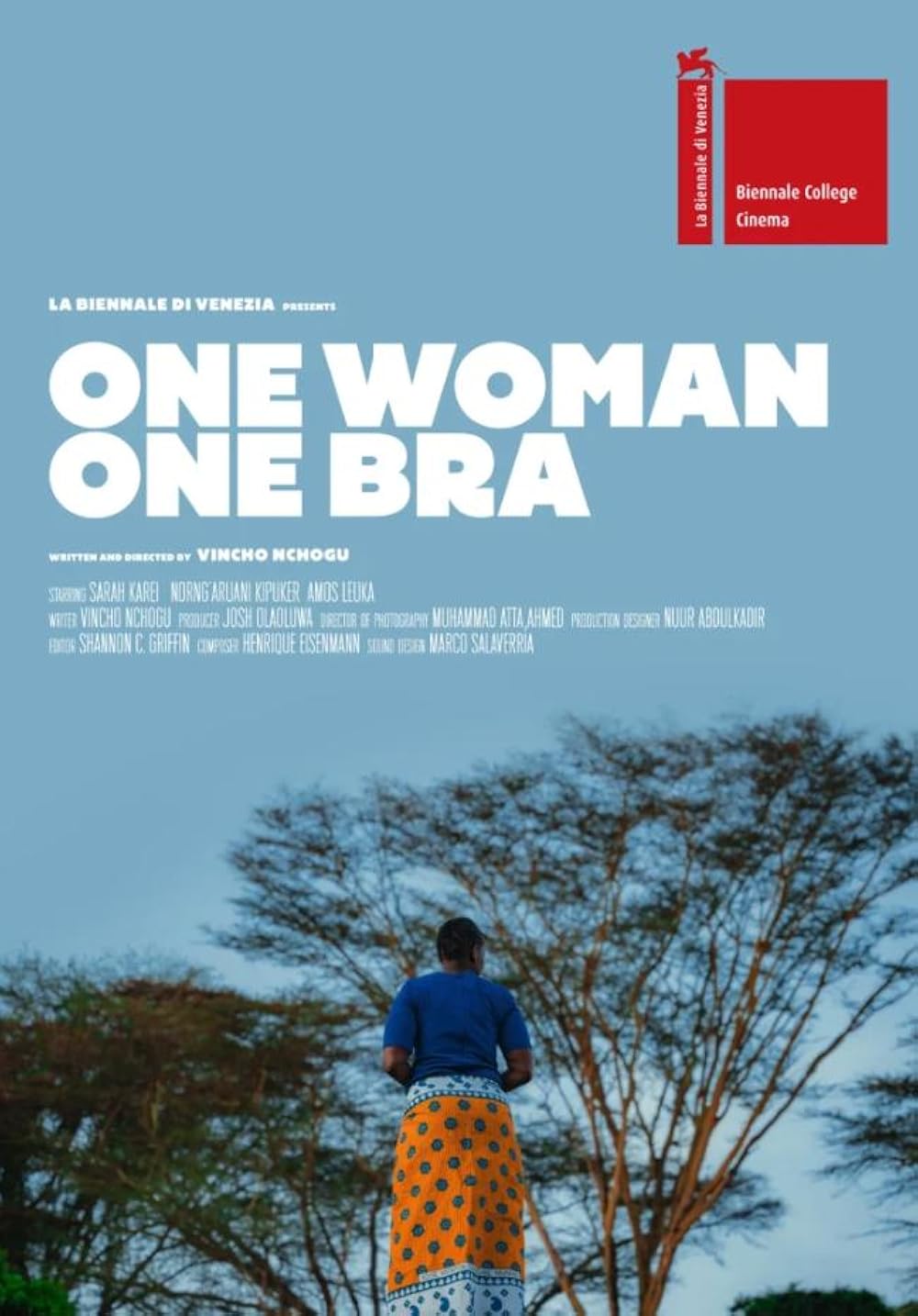
If I was given a penny for every time I use the word patriarchy in my review, then I would have been a millionaire by now. But the film One Woman One Bra has an underlying theme of patriarchy mixed with entitlement, even as you are introduced to the protagonist Star (Sarah Karei). Her central conflict remains that of a deeply unfair practice, wherein a woman is offered a land by the government – only when she is married. The theme has an early indication of patriarchy with respect to the society, even as the 38 year old unmarried woman is left out of the land deed from the government in Kenya. This essentially just remains the tip of the iceberg for the protagonist who doesn’t wish to necessarily trade her freedom with her rights – the latter holding true in the vicinity of a man. And hence the politics of the world seems eerily similar to the conflict of the protagonist here – of having to present either a birth certificate somewhere, or a proof of being married in case of females – even as the intermingling voice of politics always finds the support of patriarchy.
Written by Vincho Nchogu, One Woman One Bra can viciously be termed as a coming-of-age story of the protagonist in many ways. At the beginning, you see her naive and gullible side when she buys into the land deed. And yet at the same time, you see the presence of corruption around her. In a scene, you see her spot a younger version of herself in a magazine at a local shop, only for the owner of the shop to charge her money for keeping a copy of it with her. The same conflict of (human) corruption holds true for people around her – the community that she has grown up with are iften warm and welcoming, only until she doesn’t possess a voice of her own. And when she actually does, the community distances themselves while also trying their best to take away her land.
In many ways, the drama can also be viewed as a journey of sorts – given the kind of options and the subsequent paths opted by the protagonist. In one, she tries to find herself a man – only to be acquainted with one who would teach her driving for a start. In another, she tries to seek the photographer who had clicked her picture for the magazine, just in order to trace back her family heritage – featuring her parents. And lastly, signing up with a shady NGO for a potential video that would fetch her a sum of money. The goal is clear for her – either to arrange the money in time, or find herself a man, or lose out on the land deed.
Like a car traversing on a road with potholes, each of these paths provide a sort of an obstacle in the life of the protagonist. And this is where the satirical element in the drama with respect to the society also kicks in. In a specific instance, the protagonist is tasked with making a video about women-hygiene and the importance of bra, at the behest of the NGO. The metaphor for this very ‘support’ remains skewed given how the intention of the latter is often to exploit the phenomena of poverty p*rn, as opposed to focusing on the actual issue of the women of the tribe. Hence here, the issue for the NGOs was never to focus on ‘real’ issues, but instead, exploit the protagonist to gain virality. It was an important satire based on the perception of the West who continue to stay aloof to real issue – in this case, creating further issues of isolation for the protagonist.
You also witness a form of isolation and a superiority complex, even as the protagonist meets the photographer who had taken her childhood picture. There remains a demeanor of being dismissive as opposed to being helpful, or atleast empathetic – almost pushing her away after refusing to pay any money for the picture that had benefitted him the most. This, once again remained a searing commentary on racism and patriarchy mixed in one – while leaving the protagonist to fend for herself.
The final act remains a gut-wrenching one – particularly given the final outburst of the protagonist. And the tone of the ending remained eerily similar to the other Tribeca release Skateboarding Is Not For Girls (2026) – wherein the finale may not necessarily be a happy one, but it completes the coming-of-age arc of independence and acceptance, without having to bow down to an external traits of patriarchy and power, while retaining her voice and her spine along the way. The screenplay is thought-provoking with streaks of humour, and heartfelt emotions that really lands at the end.
The dialogues have an underlying presence of a satire that provides a different dimension to the drama that is largely urgent and heartfelt. The BGM comprises of the earthy and raw sounds of the vicinity that fully allow you to immerse yourself in the drama. The cinematography offers contrasting frames of maintaining distance from the protagonist during scenes of her journey, while also balancing the narrative with some tight frames that keep you abreast with her emotional psyche. On a side note, the wide-angle shots beautifully capture the green landscapes of Kenya – while almost providing a gravitas for the emotional and cultural context with respect to the journey of the protagonist.
The editing pattern is crisp but unhurried – accounting for the transfer of emotions from one scene to another. Director Vincho Nchogu treats the sensitive subject with a lot of flair, wherein the various tones contribute to the emotions and humour in the narrative. And whilst the plot is character-driven, it accounts for a nice little coming-of-age story with regards to the protagonist whose end goal isn’t necessary securing a land deed, but instead freedom and liberation from patriarchy and traditional customs. The direction remains poignant in every sense of the word.
The performances are pretty good by the members of the cast. And while the likes of Irungu Mutu, Amos Leuka and Norng’aruani Kipuker manage to shine – the show belongs to Sarah Kalei as Star who is indeed the ‘star’ of the show. It remains interesting on how her name remains an urgent metaphor of isolation too – having to rely on the starlight to actually appear to twinkle. She packs in a lot of emotions while using her body language and expressions perfectly, thereby putting forth a brilliant act that stays with you – particularly after a heartfelt outburst towards the end.
As a part of our Tribeca Film Festival coverage, One Woman One Bra is a satirical commentary on patriarchy, female autonomy and a false sense of Western aid that, backed by superb performances, makes for a brilliant watch. Highly Recommended!


