

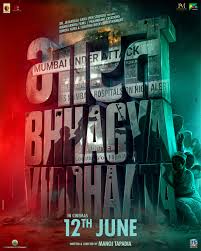
The skepticism that I had harboured around the new Hindi film Bharat Bhhagya Viddhaata was with respect to its novelty factor. Sitting in 2026, there have already been a bunch of films centered around the attacks of 26/11 – one of the darkest chapters of modern India. There was a period that I had even dreaded watching such films given a family tragedy that had transpired at the Taj that very night. But slowly as acceptance set in years later, I was seated for films helmed on the subject. And over the course of many such films, the only real takeaway remained the screenplay that would go onto showcase the resilience of the people, along with the emergence of a hand full of superheroes who contributed in countering terrorism that night, even as people were brutally and fatally shot that night. And while these humane stories are important and need to be celebrated, the main issue lies with the subject itself that comes with its set of limitations – allowing you only so much space to explore, while eventually having to settle for a standard template of storytelling, particularly in the shorter medium of entertainment (read: films). And this novelty factor or the lack of it, remained my worrying factor going into the film.
Written by Manoj Tapadia, Bharat Bhhagya Vidhaata lays its focus on the events that transpired at the Cama Hospital on the night of 26/11, wherein a brave group of nurses and hospital staff acted as protective shields in order to counter the countless bullets being splashed at them, and their patients. It remained a different form of protection, something that wasn’t just with respect to ill-health but an image fate with regards to life and death. And almost immediately, the drama remains a nod to the first season of Mumbai Diaries that tackled the same subject. For those who are familiar to the latter would clearly be able to tell the difference in storytelling here – something that felt pretty generic while also being a victim of the shorter format of storytelling.
The contrasting themes in the narrative are employed as a part of the world building, even as you are acquainted to the protagonist Geeta (Kangana Ranaut), and her nursing colleagues – Sheetal (Girija Oak Godbole), Trupti (Smita Tambe), Babita (Esha Dey) and Mohini (Rasika Agashe). You almost feel that they are a group soul of sorts, given how all of them standup against a verdict of a doctor, all of them show the same kind of compassion in treating patients, all of them enjoy their share of banter while being individually dissed by their families for their extended working hours. This may not be a bad thing but my slight problem lay with the layering – all of them seemingly are cut out of the same fabric, showcasing similar traits that add a one-tone to the proceedings. The emotional core of the characters is there but I would have liked a little more variation to their personas.
There is almost a predictable setup employed by the writing – a bustling hospital that is home to pregnant women and babies amidst other patients, a cop who is on the verge of retirement but in heart of hearts you would know that he won’t make it, a happier exchange between the characters that you also know won’t last long. Or even an elderly cop character later on in the film who would volunteer to fight, just with a purpose to garner an applause from the viewers. The ingredient missing is the texture of getting into the detailing of the characters through the dynamics exchanged, as opposed to being isolated events to showcase their traits. For instance in a scene, you see Geeta doubling up as a doctor much to the dismay of the patient’s family, only for her to be proved right after their interactions with the doctor. This is a heartwarming scene but it never circles back in the moment of crisis later on, making it just work in isolation.
One of the highlights of the drama has got to be the cautioned chaos showcased through the events of the attacks at the Cama hospital. From the inference of a gang-war to hoards of people wishing to take shelter at the hospital, and later to a full blown attack – I literally felt anxious even as my mind was transported to the night of the gruesome attacks. There are tense moments presented with flair, even as I had my mouth covered while firming clasping my seat. The characterization may have been a problem, but that was more than compensated by the ambience of tension and fear being created in the second act, including a terrific interval block.
My gripe with the specific passage of attacks remained on how the stakes in the drama were never raised. It just felt as if the drama was content on operating at mid levels, without fully raising the bar of the attacks. And by that I meant on how there were isolated moments of the main characters taking refuge while a barrage of bullets were sprayed their way – this, while having to take care of pregnant women, babies and other patients. The subtext of a commentary on protocol felt a little lost, even as all the characters operated in auto-pilot mode while largely being unharmed (I hear you that this is a true incident, but the stakes needed to be higher to create an impact).
This also brings me to the final act that inexplicably doesn’t touch upon the psychological aspects of trauma with respect to the characters. The only emotion tapped into is of relief, while having to go about their duties in a regular fashion. The aftermath remained a missing cog in a drama that then chose to focus on identification of the terrorist, almost going on a tangent with superficial plot-points of members of the family discouraging the protagonist from giving a statement to the cops, as opposed to focusing on trauma. The tone-deaf finale absolutely undoes some of the good work that the drama indulged in the second hour. And in that sense, the screenplay also remained a hit and a miss in many ways.
The dialogues cater well to the varied moods of the drama, even while packing in the element of fear pretty well in the narrative. The BGM is generic, but what impressed me was the sound design – something that almost prompted you to be a silent bystander in the war zone. The cinematography peaks in the second act, particularly with the frames capturing the chaos at a setting that would soon be a claustrophobic war-zone. This, while fairly keeping you abreast with the emotional core of the characters, with an element of fear through its lighting.
The editing pattern also is pretty sharp, ably contributing in creating that ambience of fear that would drive the narrative ahead. If only the writing was a little better in order to elevate the overall impact of the editing style. Director Manoj Tapadia does a fair job here, although the direction itself doesn’t feel ground-breaking. The key tag here is that he plays it ‘safe’ – through the world building that could have had a little more depth through its characters and their emotions, as opposed to opting for a generic narrative. As a result, the filmmaker does create some interesting moments in isolation, even as the overall impact remains mid.
The performances are wonderful to witness by the members of the cast. My general criticism remained with the briefing of the characters towards the end – something that didn’t venture into the zone of trauma in the aftermath, something that wouldn’t go down as a flaw with regards to the performances. The likes of Prasad Oak as Kedar, Sayaji Shinde as Inspector Kamble, Sunil Palwal as ACP Daynand, and Santosh Yadav have their moments to shine.
Suhita Thatte as Deena and Rasika Agashe as Mohini are in fine form, and both of them manage to make an impact through different shades of their characters – one being understated and manipulative, and the other playful and blunt. Asha Shelar as Dr Maya is decent in a character that is underwritten, wherein the commentary of the working conditions of the staff in a critical situation are lost after a point. Esha Dey as Babita is affable while doing a good job here. Girija Oak Godbole as Sheetal and Smita Tambe as Trupti are phenomenal to witness here, almost acing their one-liners while putting forth wonderfully organic performances.
Kangana Ranaut is such a talented actor, and you get another glimpse of her brilliance here. As Geeta, she brings soul to a character that is otherwise generic on paper. Her subtle moments of vulnerability and grit are wonderfully formulated through glances or even that effervescent smile that is largely disarming. She uses her expressions and body language to good use, in a solid act in an otherwise middling film.
Despite strong performances, Bharat Bhhagya Viddhaata suffers from a generic screenplay. It operates on middling levels with low stakes, failing to make a full impact at the end. Available in a theatre near you.


