

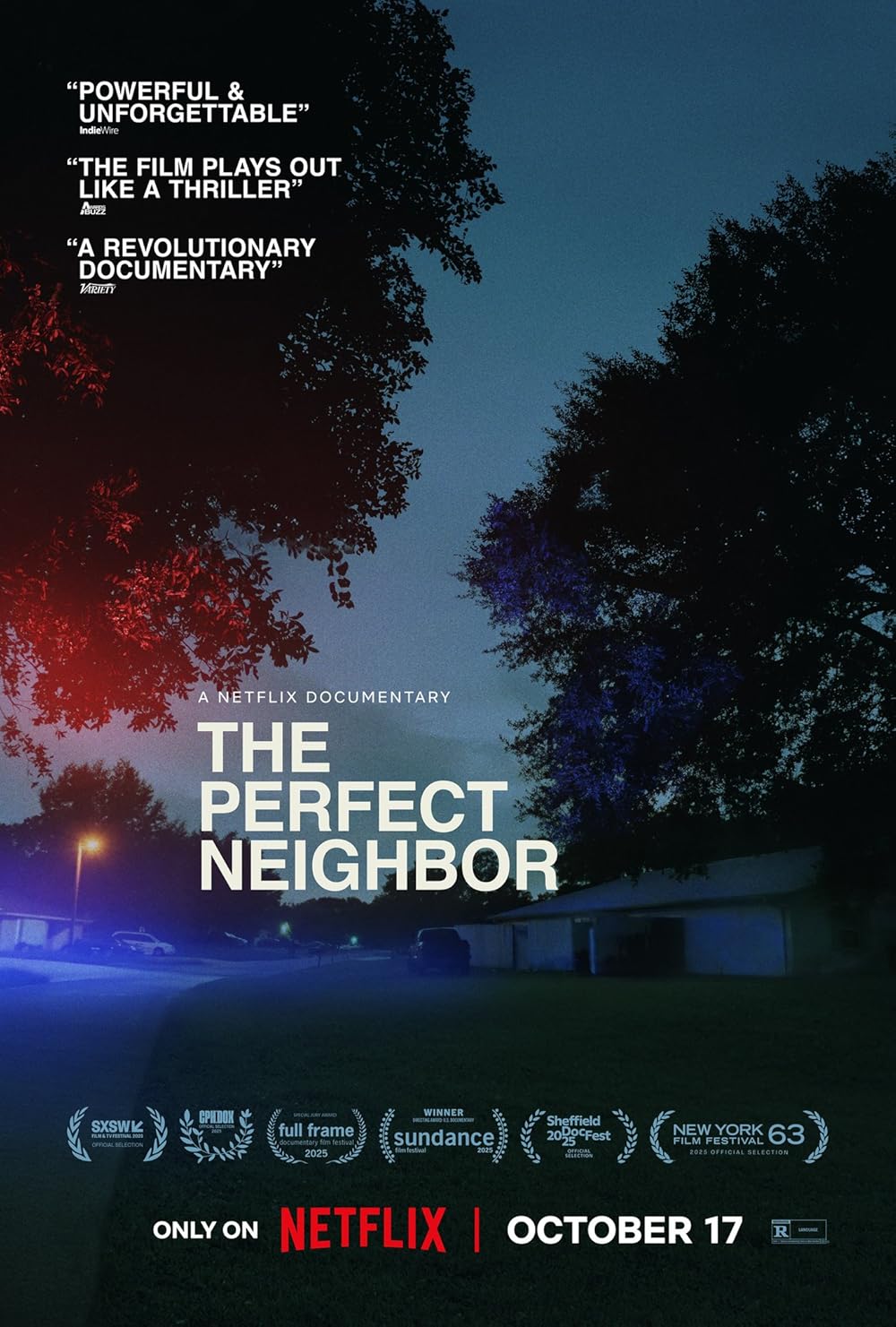
It is interesting on how the Netflix documentary The Perfect Neighbour shares a subtext with the documentary short All The Empty Rooms, both nominated for the Oscars under the ‘Best Documentary Feature’ and Best Documentary Short Film’ respectively. On the face of it, both these documentaries are about killings – a broader binary term that is morally infuriating and harrowing at the same time. And both these documentaries ably reflect on the divisive nature of the society. On the micro-front, the issue remains all the more worrisome on the growing gun-culture in America – even as news would often float around about either mass killings in a particular state, or a murder of an individual based on racism.
The Perfect Neighbour is perfect alibi of sorts, similar to the White Supremists who would never admittedly carry out attacks based on racism. It is a facade that the documentary builds on, even while deftly touching upon a significant loophole in the law – more specifically Florida’s Stand Your Ground law which states that killing people in self defence is acceptable without any charges being pressed on the accused. In a way, the theme in the documentary is represented through the title – something which is far too unassuming until the eventual tragedy strikes. And therein lies the harrowing experience that immediately makes this documentary an urgent watch.
Directed by Geeta Gandbhir, The Perfect Neighbor has got to be one of the most unique narrative styles that I have witnessed for a documentary. Usually documentaries would be associated with voice-overs of people who would frequent the narrative with sharp cut-aways, in what would be a reconstructed outlook of the events that may have transpired. But here, the first person narrative utilizing body cams, security footage and CCTVs automatically draw you into a narrative that offers an immersive and harrowing first-hand experience of the events.
The foreshadow meticulously paints the after-effects of a crime that may have been committed by deliberately concealing it from the viewers, even whilst you are air-dropped into the investigation that transpires. This investigation itself finds its voice in a non-linear fashion, just in flashes throughout the narrative. But when the writing takes you back in time, when an elderly woman calls the cops for the very first time after children of the neighbourhood ‘encroach’ her properly while playing, you cannot simply connect the dots directly.
The documentary has a unique distinction of unfolding as a thriller – with a proper three-act structure that feels harmless and unassuming to begin with, before transforming into one of the most disturbing documentaries that I may have watched in recent times. And it is funny on how the central conflict between the accused Susan Lorincz and her neighbors plays out repeatedly. You notice on how intolerable she is – a bit of a nuisance for her neighbors, whilst repeatedly calling the cops for trivial events. The beast within her is dormant, but threatening although unseen to the people around her who don’t take her seriously.
Susan Lorincz remains an urgent character study here – a person who is infuriated of having to share the neighborhood with black people to the extent that she doesn’t hesitate in using racial slurs (including the N-word) for them. What further infuriates her is that other white people including her landlord remain unaffected. You almost notice the mood of the neighnorhood when she isn’t around – people are relaxed, a trait that also extends to the cops in the fray. And so the events leading upto the D-day tactfully raise the tensions brewing in the narrative, only to culminate into a shocking incident caught on camera. The format of this true-crime documentary could not have been more urgent and important.
The loss of a human life is always tagged to the emotions in store for the family of the deceased. In this case, the death of Ajike Owens would not only leave you seething with anger, but also filled with a range of emotions for her four young children who had freshly lost their mother. And the tragedy would automatically transform into a scar which over the years would transition into a feeling of fear and helplessness. The question being begged from the children’s POV remained on what could they have done for their mother to be alive? The answer was nothing, intrinsically in a society that is increasingly divided by the authorities for power. Supreme power is a dangerous seed, and in order for it to sustain, it would require pitting people against the other – specifically in this case being that of White Supremacy over bouts of racism. It is tragic, heartbreaking and frightening at the same time, given how the neighborhood seemed like a regular one, extending its blueprint to many other neighbours across the world.
It felt furiously odd on why Susan Lorincz wasn’t immediately arrested for manslaughter. For context, she had pulled the trigger on the account of ‘fear’ and feeling ‘threatened’ without acknowledging the person beyond that door. In a fleeting moment previously, you spot Susan in a similar predicament at night when a cop lnocks on her door. The impulse remains of frustration, more than fear. But the foundation of the case of the accused remains murder, there is little doubt on where it all would lead to. Despite that, Susan was arrested only later on owing to the pressures from the community – almost getting away with the exploitation of the ‘Stand Your Ground’ law that hasn’t shifted the needle of justice while accumulating more such cases of murder.
The idea of deliberately having a loophole in the law cannot be ignored to. If anything, the caption at the end does tell you a mind-numbing statistic that has clearly widened the gap of racism in the wake of hatred. Thankfully in the case of Susan, the jury could see through her facade and ring in the justice for the family by convicting her for 25 years. But the broader issue stays – the fight against racism has not ended, in fact the divisive society has further been divided since. The rising gun-culture in the United States Of America is frightening and worrisome, and so is racism – both originating out of hatred.
I wonder how many more documentaries must be made before the society lives in peace. How many more Ajikes need to be killed before the society opens their eyes? And what about the children who would go to school and not ever return to their parents? In times of wars and violence, would the world ever be safe again for our children? Weird times that we are living it, even as a feeling of helplessness is a regular feature in my life now. Much like my defeated thoughts while watching the documentary.
A nominee under the ‘Best Documentary Feature’ at the Oscars of 2026, The Perfect Neighbor explores the subtext of racism in a harrowing and heartbreaking documentary that unfolds like a true-crime thriller. And in the same breath, this documentary makes for an urgent watch!


