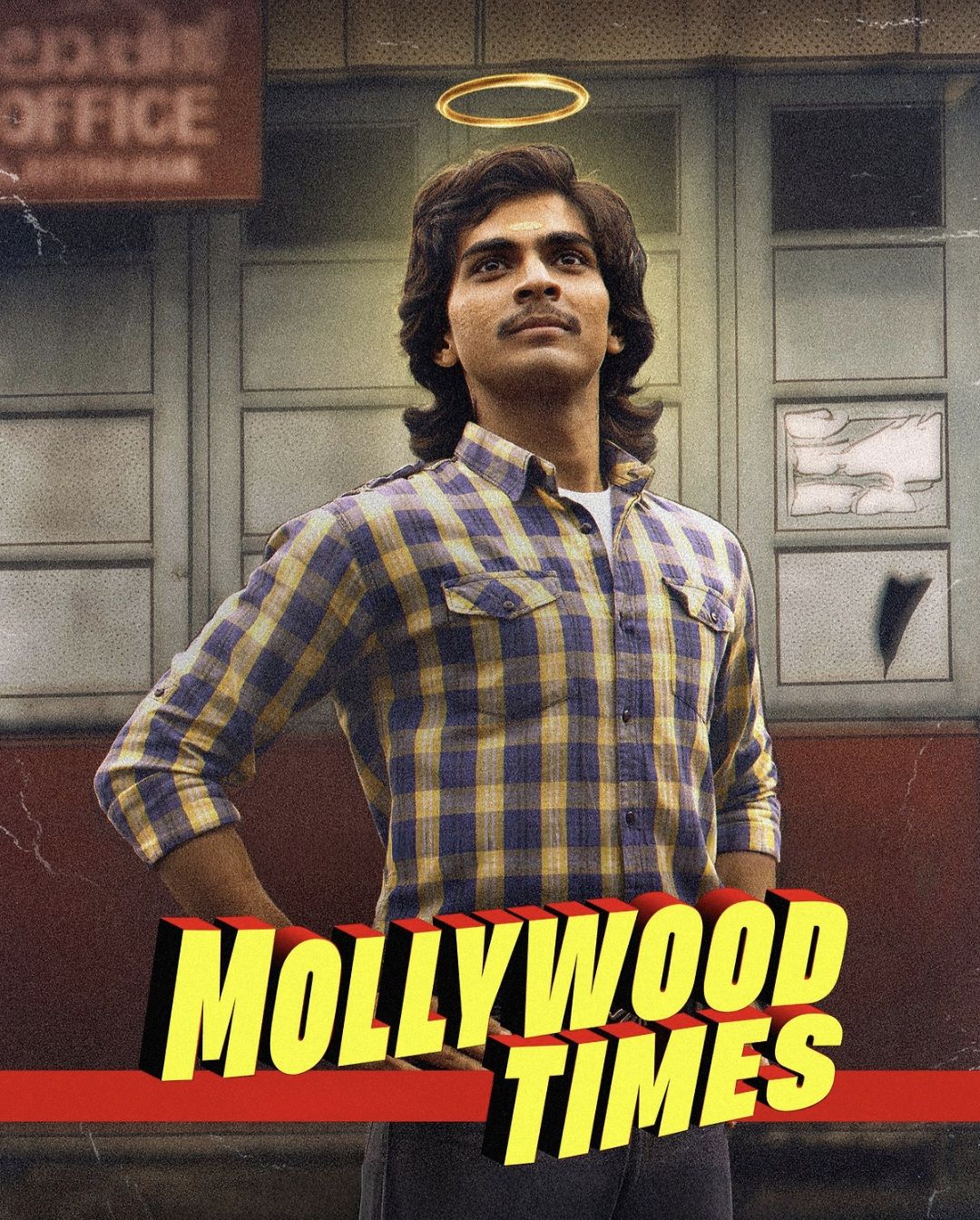

There is a stark similarity between the characters of Vineeth Madhavan (Naslen) in the new Malayalam film Mollywood Times, and Mukundan from Mukundan Unni Associates (2022). Ironically, both want to achieve success while doubling up as the perennial underdog in their own lives. But the sliver of a difference lies in their individual approaches. So while Mukundan is a devil disguised as a litigation lawyer who wouldn’t flinch at the thought of endangering the lives of children in order to earn an insurance sum, Vineeth remains more idealistic with his approach of being the greatest horror director of the Malayalam Film Industry. In a scene, he doesn’t hesitate to delete the copy of his own film simply because he doesn’t wish to compromise on the ‘successful’ tag of a director whose movie has worked just because the lead of his film has passed away. It remains a very specific form of narcissism that includes him having to survive on his own terms in a film industry that would essentially look for ‘yes men’ to do the job. For the protagonist though, being good isn’t enough – it is about being the GOAT of horror films!
Written by Ramu Sunil, Mollywood Times starts off as an endearing coming of age story that has seeds of The Fablemans (2022), The Hand Of God (2021), and even traces of Cinema Paradiso (1988) when you are initially introduced to the protagonist in his fifth grade. The setting remains that of a movie theatre with a DTS facility, playing the 1999 English film The Mummy. And the imageries of anticipation, awe, and captivating energy of cinema is what marks a watershed moment in the life of the young protagonist, who soon discovers his love for cinema while looking upto his inspirations Manoj N Shyamalan, Martin Scorsese and Steven Spielberg.
The drama remains a very specific character-driven plot that taps into the narcissistic traits of the protagonist early on in the narrative. For instance in a passage, he understands the difference between a boy aspiring to be a filmmaker in the US as compared to someone doing the same in Kerala. The gulf maybe wide but our protagonist is up for the challenge – wanting to take over the Malayalam Film Industry more like a saviour, while wanting to make the greatest horror film of all times. In a brief moment, you also are witness to his insecurity – of lagging behind the timeline of wanting to be a full fledged filmmaker by the age of 22, more on the lines of his idols, even while worrying that he hasn’t even made a short film yet, again unlike his idols.
The characters of this world account for a delicious black comedy too – each of them playing their parts in transitioning the drama from a love letter to cinema to a love-hate letter to cinema, from the POV of the protagonist. For instance, you have his competitor, Arjun (Sangeeth Prathap) who wouldn’t think twice before ‘stealing’ the style of filmmaking that is unique to the protagonist. You also are introduced to Sachin Vaikom David (Sharafudheen) who remains a character similar to the protagonist – wanting to move out of the shadows of his father who was a ‘plagiarist’ writer himself, while having to struggle to make ends meet in an increasingly cruel film industry. Elsewhere, one is also acquainted with a producer who threatens to ruin the protagonist’s career, a film critic who acts as his alter ego, an actress who boasts of starry tantrums, another producer who wishes to put money in the proragonist’s film just so that it flops, and it saves him on some income tax.
In many ways, the narrative unfolds like a chilling horror story, invariably featuring the protagonist in a meta-film on his own journey. So there are themes of writer’s block, or the protection of originality that all form vital passages of the protagonist’s life who wishes to survive on his own terms in the film industry. In a way, there is a meta-commentary on the industry itself that coincides with his journey. For instance, the industry giving an award to a character just because his film deals with social issues and he belongs to the lower caste, as opposed to being given on the quality of the film. In that sense, the arc is reverse for the protagonist whose sole validation is if a person dies or enters a state of coma while watching his horror film – in what is the purest form of appreciation. And in doing so, his journey unfolds like a horror film!
It is interesting on how the coming of age angle is transitioned into bouts of horror for the protagonist, while accounting for traces of religion in the mix. At the start, you witness the protagonist donning a ‘Tilak’ even while making short films like Yakshi and Rakshashan. But when his film Mrugam is about to release, he is defeated by another film Deivam (God) that beholds a similar concept. But instead of conceding his victory, he unleashes the devil within him only to go on to make films like Nidhi and Manushyam, while completely overhauling his religious traits. The subtext remains the big wolves of the industry that wish to act as predators, ironically epitomizing the names of his films in reverse chronological order.
The proceedings feel like a series of Russian dolls that keep the events dark and murky, even while momentarily pausing and accounting for the vulnerability of the protagonist. And yet, there isn’t really a happy ending in store – so if you are expecting bouts of upliftment, then you might be disappointed. This ain’t an underdog story that doubles up as the state of affairs of the film industry. This is a horror story (remember) that accounts for endless nightmares for the protagonist in his bid to survive and climb the ladder of being the greatest horror filmmaker of the industry, invariably having to witness the horrors outside his film too. The cycle is vicious, and unfolds as a staggering sledgehammer!
The dialogues offer a psychological edge to the proceedings, much like Abhinav’s previous venture Mukundan Unni Associates – with the monologues being played inside the mind of the protagonist. The music and BGM by Jakes Bejoy offers softer notes with haunting undertones, something that is reflective of the psyche of the protagonist. It is mildly Shakespearean while acting as a ticking reminder that this isn’t a coming of age drama, but more like a horror story – with notes getting subtly louder as the drama progresses. It remains a very distinct approach to the dark comedy genre that adds layers of intrigue to the narrative.
The cinematography comprises of framea that work on two levels – one from the exterior POV that acts as a love-hate letter to cinema. And the second being more internal, featuring frames with tight close-ups that offer a sneak peek into the psyche of the protagonist. Additionally, the frames have a specific symmetry that one would associate from a Wes Anderson film, with most of the plot points being played out with the protagonist literally being at the center of things – a metaphor for how he believes himself to be the saviour of the film industry with a main character energy.
The editing pattern is pretty sharp while stitching together multiple subplots and flashbacks ably – without losing sight of the character-driven plot in play. Director Abhinav Sundar Nayak absolutely hits it out of the park here, with a character-driven plot that offers fifty shades of horror. But interestingly, he manages the tonal shifts perfectly – so much so that even the grey hues feel light and frothy, while consistently being focused on the psyche of the protagonist who would stop at nothing. This nihilistic approach mixed with perfection results in a deliciously dark drama that hits all the right notes, even as the direction remains brilliant here.
The performances are wonderful to witness by the members of the cast. Rooth P John, Binu Pappu as Mamchadi Venu and Viswajith Odukkathil as KT Peter have their moments to shine. Appunni Sasi as Fayaz, Chandu Salimkumar as Meljo, Jagadish as Vaikom David and Basil Joseph as Swaroop are terrific in their respective roles, while offering varied shades and dimensions to the drama. Prasanth Alexander and Meera Nair as Vineeth’s parents are sincere and earnest with specific quirks to their character traits. Balachandran Chullikkadu as Vineeth’s grandfather takes the same quirks even further, with a subtly astounding act. Gopika Ramesh as Hana and Vineeth Sreenivasan as Harris are impressive in their respective roles, with both of them leaving a mark with ticklish undertones to their performances.
Althaf Salim as Sunil and Roshan Shanavas as Sujith remain perfect foils for the protagonist to thrive, and both of them a joy to witness here. Sharafudheen as Sachin Vaikom David is a character similar to the protagonist, even while dealing with an identity crisis of his own. And he uses his expressions and body language to such good use, in order to communicate the vulnerabilities and sinister streaks of his character. Sangeeth Prathap as Arjun is a lot of fun to witness in an act that often finds him at loggerheads with the protagonist. Rajesh Madhavan as Anand remains well restrained while often being a comforting alter ego to the protagonist.
The show ultimately belongs to Naslen Gafoor who is brilliant as ever as Vineeth Madhavan. There are so many shades to his character that ranges from aspiration and naivety, to persistence and narcissism – all of which are conveyed through his brilliant expressions. In fact, the character arc itself felt complex – often riding on an ego of wanting to not only survive but be the greatest of all time – two very extreme emotions that are so wonderfully accounted for, in a towering performance of the highest order.
Mollywood Times operates as a haunting love-hate letter to cinema, spinning a narrative that unfolds with the unsettling dread of a meta-horror story. While its highly niche appeal means it won’t resonate with everyone, the film functions as a staggering, cinematic sledgehammer. It relentlessly carves its way into a deliciously dark psychological space, balancing intense tension with sharp, unexpected bouts of humor. Driven by one of the most brilliant, character-centric plots of recent times, this masterclass in storytelling firmly cements itself as a towering achievement in psychological cinema. Available on JioHotstar and Highly Recommended!