

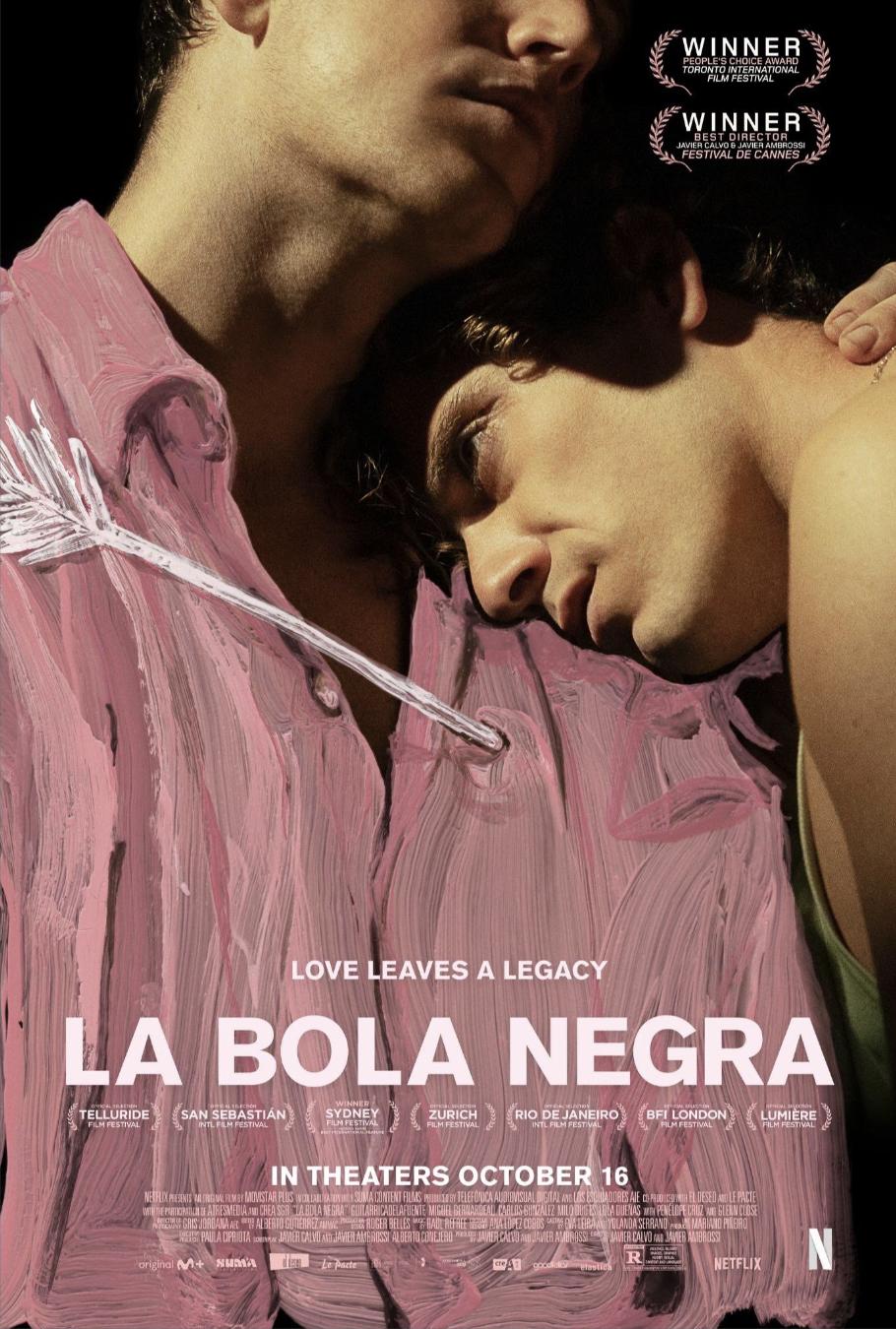
There is a beautiful line in the Spanish film La Bola Negra, Spain’s Official Submission to the Oscars of 2027, that encapsulates the spirit of the drama. In a particular scene, you witness a character uttering the words – ‘Transvestitism is the fantasy of the possible. War is the opposite.’ The importance of this scene cannot be undermined either – given how the definition of queerness is completely shifted in the moment. The subtext remains on how queer identity and cross-dressing remain symbols of liberation, allowing the shackled spirit of an individual to break away from the patriarchal societal norms, allowing them space to breath and thrive. War on the other hand, is a symbolism of repression – wherein an individual is not only compartmentalized, but also conformed to bouts of destruction – forcing them to lead a bleak life that is laced with control and fear. It is a very specific contrast that the characters face across atleast two timelines in the film, in a setting that is plagued by war and destruction.
Written by Alberto Conejero, Javier Calvo, and Jabier Ambrossi, La Bola Negra unfolds across three timelines of 1932, 1937, and 2017, each lead by a queer protagonist – Carlos (Milo Quifes), Sebastian (Guitarricadelafuente), and Alberto (Carlos Gonzalez). It is interesting that the common trait connecting these characters remains that of liberation (an alternate meaning of ‘queer’), and yet, the contrast of the lives in the previous century are as clear as day and night. Unlike Alberto who is christened with an air of casualness, often relying on dating apps to flaunt his queer imagery while enjoying the perks of liberation by being a former playwright and a modern day historian, the other two protagonists did not enjoy similar bouts of freedom back in the day – wherein the queer identity of an individual was regarded as a cardinal sin and a punishable offence.
The writing is quick to draw a searing comparison between the characters of Carlos and Sebastian – each of them waging a war that is personal to them, even as war wages around them too. In fact, the relevance of the title (transted to ‘A Black Ball’) emerges as a searing metaphor for rejection, even as Carlos is shown to be voted against while trying to apply for membership at his father’s casino – just due to his homos*xuality. On the other hand, Sebastian remains a nationalist fighting the Republicans in the Spanish Civil War that has lasted for 3 years. In the opening act, you see his clan about to welcome the Italian planes, only to be shot mistakenly – forcing Sebastian to flee from the scene, while later being forced to be integrated with the Nationalist Army. It is a very specific form of control, wherein the identity of the protagonist remains repressed – forcing him to lead a life of lie.
The proceedings also tap into a similar zone for Carlos, even as his father suggests him to lie about his identity in order to eventually get the membership. The period remains that of repression, directly coinciding with multiple queer individuals like Carlos who have been living a life of lie for decades, quietly brushing off their feeling of being ‘different’ from the folks around them. In a pivotal scene of liberation, you notice Carlos dancing away to his full glory – unworried about the world around him; a direct parallel to Sebastian who is taught by a local flamenco artist on the art of liberation through cross-dressing and dancing. Either way, these fleeting moments are the only ones housing a vibe of freedom for both characters in question, who otherwise remain repressed in the midst of a war.
The writing majorly focuses on the soft and tender dynamic between Sebastian and a Republican soldier Rafael Rodriguez Rapun (Miguel Bernardeau). There is steady sense of infactuation that develops for Sebastian, who is drawn to the beauty of a man who is equally repressed as him; only belonging to the other faction of war. The attraction also spews from his love for poetry – a faint art of liberation in the midst of suppression, forming an unlikely companion piece to his heart that yearns for love. You do know that this dynamic is destined in tragedy, a rather heartbreaking one – but laced with a sense of responsibility for the future generations to come with respect to their identities.
This incident coincides with another heartbreaking moment in the life of Carlos, who is acquainted with an elderly woman who narrates the story of her son being killed for being ‘different’; thereby directly drawing a parallel to the suppressed state of the protagonist here. The metaphor introduced in the form of the lady calling Carlos her son is a heartbreaking one – for it represents the killing of queer individuals for decades on a philosophical and mental level. This remains a sharp contrast to Alberto in the 2017 timeline – simply given how he enjoys the perks of a generational trauma induced by the past generation that contributed to his freedom of identity, something that he is unaware of at the start.
The writing also ably taps into the dynamics between the characters across timelines, linking the hyperlink structure to add some purpose to the narrative. It reminded me of the 2018 Telugu film C/o Kancharapalem in a very loose way – except that the events here are based on crucial facts that would go onto pave way for future generations. The deliberate idea of inducing a missing piece of the puzzle (of the manuscript) also felt like a neat move in keeping the nuanced interpretation of the central theme of homos*xuality relevant and emotionally palpable, even as it is revealed that Sebastian is Alberto’s estranged grandfather, having been tasked to preserve the manuscripts of Rafael’s mentor and lover Federico Garcia Lorca (Alberto Cortes); a poet who was executed for his identity in a war-torn era. And Carlos remained the protagonist of the play ‘La Bola Negra’ written by Lorca, whose manuscript needed to be preserved.
The final act of the film will go down as one of the most heartbreaking ones that I have witnessed all year. There is a beautiful metaphor in place with regards to a character covered in snow – having lived a life of lie all along, whilst laying his head for the final time in the blanket of death in the afterlife. There are traces of grief and regret that make way for palpable emotions, almost encircling as a life lesson for future generations that would go onto enjoy a contrasting life of luxury. Freedom comes at a cost, and the writing elaborates that beautifully.
In another pivotal scene, you notice two characters conversing for probably the last time before being separated – wherein a character tells another on how important preservation of his play is, just so that people don’t end up like them; a bittersweet and heartbreaking exchange that pierced my heart like a sharp needle, only to bleed itself with some pure emotions. The screenplay masterfully offers a contrasting commentary on love, identity and war – deliberately spanning across timelines to christen the subsequent feeling of sacrifice, that would transform in the form of freedom for future generations to follow. The political subtext to this argument cannot be denied too – particularly in times that we live in today!
The dialogues are laced with consistent bouts of emotion that are hard to shrug off, long after the end credits roll. The music and BGM perfectly compliment the feeling of claustrophobia and repression, directly symbolizing the suppressed trait of identity for its characters. This, while also using an effective sound design to depict the searing effects of war – in the form of gunshots, or footsteps of soldiers, that invariably remain extensions to the sound design of The Zone Of Interest (2024).
The cinematography comprises of frames that nudge the viewers to get into the fractured psyche of the characters, while allowing them room to be emotionally invested in the characters. I also loved the use of the colour grading here – ranging from monochrome to hues of blue and grey, with grainy imageries that directly corelated to the mood of the drama laced with depression, in a time period that remained a bleak one for the country (and the world). The hints of vibrancy that you see in the current timeline is also a symbolism of hope that has been transformed in the form of sacrifice from future generations. The symbolism involving a wide frame depicting the phrase ‘A New Sun Rising In Spain’ against the idea of their own citizens being taken captive, or a frame showcasing a spite of arrows inserted in statues of mythical beings, write an irony or two also in the context of the drama.
The editing pattern is incredibly sharp, seamlessly intercutting the scattered timelines, while compartmentalizing the various moods spread across them. The idea also was to maintain an emotional thread that would remain consistent across timelines, and the editing integrates this beautifully in the narrative.
Directors Javier Calvo and Javier Ambrossi ground a sweeping historical epic within a devastatingly intimate emotional core, capturing the ache of suppressed longing and the resilient beauty of queer desire. Their lyrical direction contrasts the cold, external violence of the Spanish Civil War with the internal, bleak colors of a fragile identity fighting to exist. Through deliberate, poetic framing, the makers allow the viewer to get a glimpse into the psyche of the characters while accounting for a heavy emotional quotient that is laced with sacrifice and loss. The direction remains spectacular here.
The performances are wonderful by the members of the cast. Alberto Cortes as Federico Garcia Lorca delivers a gentle and tender performance that gently tugged the strings of my heart. Yenesi as Goyita, Lola Duenas as Teresa, and Natalia De Molina as Valentina have their moments to shine, and each of them deliver impressive performances. Penelope Cruz as Nene Romero, and Glenn Close as Isabelle Durand remain exceptional with their respective acts, while fullt imbibing and imparting the spirit of the drama with regards to its themes.
Miguel Bernardeau as Rafael Rodríguez Rapún commands the screen with an intensely charismatic performance as Lorca’s real-life lover and injured political prisoner. He beautifully captures the unbreakable spiritual fortitude of a soldier facing death while building a complicated, silent bond with his guard. His magnetic presence provides the definitive emotional core of the film’s wartime chapter.
Carlos González as Alberto grounds the 2017 segment with a compelling, modern sensibility as a gay historian uncovering a long-hidden family inheritance. He balances professional focus with intense personal bickering, capturing the frustration of a man trying to reconcile with his heritage. His sharp, realistic portrayal brings a vital contemporary weight to the sweeping multi-era narrative.
Milo Quifes as Carlos brings a haunting, quiet reserve to the elegant young man who triggers the film’s title when he is blackballed by his local casino in 1932. He perfectly embodies the crushing isolation of a character trapped between his father’s rigid demands and his hidden desires. His delicate, poetic portrayal beautifully establishes the movie’s central themes of systemic persecution.
Guitarricadelafuente as Sebastian delivers a moving performance as a young trumpeter conscripted into the Nationalist army. He anchors the 1937 timeline by conveying severe moral and s*xual confusion with an understated, raw vulnerability. His emotional journey peaks in a heartbreaking scene where he masterfully channels his grief through his musical instrument.
Spain’s Official Submission to the Oscars of 2027 (and probably one of the frontrunners in the Foreign Language Category), La Bola Negra delivers an intimate, heartbreaking commentary on identity, love, and sacrifice by subverting traditional themes of grief and pain. Set against a parallel contrast with the repression of war, the film balances its heavy themes with excellent performances that elevate it into a deeply heartfelt and compelling watch. Through a masterfully nuanced narrative, it explores how human connection endures even under the crushing weight of political oppression and conflict. This poignant duality allows the film to transcend typical wartime dramas, offering a resonant, character-driven study of resilience that lingers long after the credits roll. Highly Highly Recommended!


