

One of the easiest sentiments to portray in a war film is that of nationalism and chest-thumping jingoism. This is because these are the emotions that you would imagine to drive the narrative, in an arena that is designed for masculinity – specifically on celluloid. But the reality is different – the case in point being one of the iconic scenes in Lakshya (2004) wherein an army officer has a meltdown in front of Romila (Preity Zinta), wherein the makers used his meltdown as a subtext for frustration being built up within him. The bottom line is – No one likes war, no one likes lives being lost, but it still remains a sad reality of today’s time, even as war per se demands the bravery and sacrifice of the soldiers.
It is interesting on how the new Hindi film Ikkis becomes the second film in a month to be set in Pakistan after Dhurandhar (2025). But in the same breath, the tone of the two films are at two extremes. In the opening sequence of Ikkis, you are air-dropped into the Pakistani home of Brig. Nisar (Jaideep Ahlawat) who has a photo of an Indian army officer on his wall – and his only intention of removing it was because he would be having an Indian visitor at his place. That Indian visitor is the father of the man in the frame, a moment laced with skepticism given how he remains unaware of a secret that Nisar has been holding within him. But what follows is a beautiful tale of friendship and love in what would go onto be a refreshing anti-war film to kick start 2026 (much needed in today’s times).
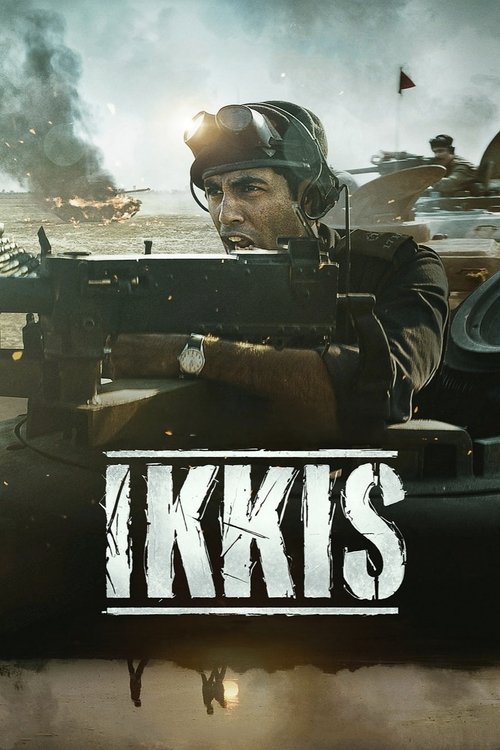
Written by Arijit Biswas, Pooja Ladha Surti and Sriram Raghavan, the promotional visuals of Ikkis may have fooled you on two accounts – one that this is a biopic of 2nd Lt. Arun Khetarpal, the youngest awardee of the Param Vir Chakra, and second, that this is a war film. While the first is partly true, the focus of the film also lays elsewhere wherein you are introduced to Brig. Madan Lal Khetarpal (Dharmendra) who gets a chance to visit Pakistan in 2001 – in order to visit his ancestral home that was left behind after the partition, and to visit the place where his son Arun was martryed in 1971. And in it is the subtext of an understating anti-war drama, something that coincides with the life and character arc of Arun Khetarpal.
When you are first introduced to a 21 year old Arun in 1971, you witness the exuberance of youth during his birthday celebration. But in the very next moment, you also see his eyes light up when he is called for his duty – his words being ‘Ladaai Hone Wali Hai?’ graces the occasion. It is basically how Arun has been programmed to think around war, much like most of us who were nothing but keyboard warriors last year. I remember reading a facebook comment in which a certain keyboard warrior had called the latest Indo-Pak war as ‘exciting’, with missiles being flung from both sides.
Arun is not different, almost being enamoured by the very thought of war – volunteering to be on the forefront inside his tank as a tank commander, or being focused on serving the nation by being disciplined and expecting the same discipline from his fellow peers. In a scene, you see him ratting out his teammate given that he broke the rule. Even his relationship with his girlfriend Kiran (Simar Bhatia) remains strained given that he wishes to redirect his focus to serving the nation. That is what Arun has been fed (remember he is an army child too), and something that he strongly believes. But the reality is something drastically different even as most things remain a blur for Arun.
The anti-war themes are evident in the narrative even as you witness a slightly clunky non-linear narrative unfolding in the first hour. And I say clunky because the abrupt cutaways slightly falter in completely immersing you into the narrative. Nevertheless, there is an softness to the narrative even as you witness Madan Lal visiting his ancestral home in Pakistan, only to be greeted with open arms and tears aplenty. In the next moment when you witness a sort of revolt from a handicapped ‘limbless’ ex-soldier of the Pakistan army, you see Madan giving him support while grieving on how war may have just taken the limb of him, but he has lost his son (thereby pacifying him). It is a beautiful metaphor of support while dwelling on the harsh realities of war.
Elsewhere, the anti-war themes are evident in the life of Arun too. In a scene, you see him hesitate in sacrificing a goat that was used a a sign of good luck – a brief account of what really lies ahead for him. Somewhere when the Indian contingent crosses the border, a character exclaims on how both sides look the same. Even the Pakistani public mistake them for one of their own – that is how close the two nations are in terms of identity. Then why the hate you may question? The harsh realities of war are soon engulfed in the narrative – even as Arun is witness to deaths for the first time, pausing and later reporting on how his regiment is safe. These are small but vital moments that give texture to the drama as well as adding to the personality of the protagonist that begins with bravado around war but soon wakes up to the harsh realities of it.
Make no mistake, the warring elements are in play in the second hour wherein the Battle of Basantar unfolds. And this is also the occasion wherein the anti-war themes take the shape of duality here. On one side, you see Lt Col. Hanout Singh (Rahul Dev) calling the shots – later on taken over by Capt. Vijender Malhotra (Vivaan Shah), then on the other hand, you see Brig. Nisar doing the same. Somewhere, there was an Arun that was being nurtured on the other side too – even as both sides are bombarded with tanks. You feel the emotions of the characters in the moment, more on the lines of carrying off their duties more than a streak of nationalism and jingoism that you would associate in this situation. For instance, the identity of Arun was the tank that he was in – wherein you didn’t spot a flag flurrying in the distance of either side. That is the beauty of the gaze that the filmmaker employs.
I would be lying if I were to say that I wasn’t moved at the end while witnessing the culmination of the beautiful dynamic between Madan Lal and Nisar. The themes of guilt and despair were transformed into a bout of heartfelt friendship laced with forgiveness, even as Madan Lal exclaims on how war would continue given how people in power would keep scratching the wounds. It remained a powerful message of humanity that could not have come at a better time, even as I did experience a lump in my throat. Yes, this is an incredible story of sacrifice but told through the lens of forgiveness and friendship in what has got to be one of the most beautiful anti-war films that I may have watched lately.
The dialogues are sprinkled with the broader themes of anti-war that coincides with the evolving character arc of the protagonist. The weaklink remains the music that doesn’t fully exhibit the sentiments of the film, even with songs proving to be momentary bouts of distraction. The BGM and the sound design though are top notch, something that not only transport you on the battlefield but also keep a check on the anti-war sentiments that are pivotal in the narrative. The cinematography is absolutely top drawer, with certain frames that reminded me of anti-war films like Hacksaw Ridge (2016), or the more recent All Quiet On The Western Front (2022). The frames do not shy away from the gore of war, but they also act as a reminder that war isn’t fun and games either. In other words, the frames don’t glorify war scenes in any ways while focusing on the emotional aspects of the drama through the characters, and steering away from some chest-thumping jingoism.
The editing pattern is a mixed bag here, although it progressively improves in the film. The non-linear pattern boasts of sudden cuts that don’t allow you to fully invest in the drama in the first hour. But things improve significantly in the second hour wherein a beautiful match cut accounts for the change in the production design, even while a switch is made to the past. Even the high-octane war scenes evoke a sentiment given how well the scenes were edited.
Director Sriram Raghavan is a master of his craft, and Ikkis is a symbol of it. In times of Dhurandhar wherein the hate even extends to film critics who are merely doing their jobs, Raghavan opts for a bold anti-war narrative in a war film that results in a refreshing watch. He is mindful of the intricacies of the genre without glorifying any event, instead only focusing on the emotional journeys of his characters. This, without compromising on the technical aspects of the war – tactfully creating frames that are aesthetically beautiful. The direction is excellent here wherein Raghavan’s craft slowly trascends into your heart while deftly tugging it.
The performances are wonderful by the members of the cast, most of whom are handpicked by casting director Vaibhav Vishant (casting associate – Avinash Kuri). Vinay Chhoker, Jitender Sain, Aryan Pushkar, Vijender Sahu, Shree Bishnoi, and Pragati Anand all have their moments to shine. Ekavalli Khanna as Maryam, Avani Rai as Saba and Suhasini Mulay as Maheshwari are such beautifully competent actor that they leave a mark despite a limited screen time. Deepak Dobriyal as Jahangir is brilliant in that one scene that has a small little character arc for him to display his incredible acting chops. He goes from hate to love, and from angry to emotional in a matter of minutes, but he essays it so well that he fills you up with a lot of emotions. Simar Bhatia as Kiran has a good screen presence and she definitely makes an impact despite the writing using her character as a distraction.
Rahul Dev as Lt. Col Hanout Singh uses his body language and mannerisms to convey the commanding presence of his character. Sikandar Kher as Ris. Sagat Singh maintains the tonality of his character wonderfully well, never getting carried away with his comical undertones while respecting the dignity of his character. Vivaan Shah as Capt. Vijender Malhotra is in a similar mould as his protagonist, and he brings his own charm with his tender but assertive performance. Asrani in one of his final outings also leaves a smile on your face (with a tear in your eye).
Jaideep Ahlawat as Brig. Nisar brings a lot of poise to his character while delivering a soft and intimate performance that is devoid of hatred. His minimalistic approach is beautiful to witness here, but there is also a tenderness to grace his character that in-turn fills you up with a lot of emotions. He was absolutely brilliant here. Agastya Nanda has significantly improved from his last outing, although there is still a scope for improvement. As 2nd Lt. Arun Khetarpal, he aces the war scenes by bringing in some much needed intensity, enacting his part beautifully. He is briefly found wanting in a few scenes in the first hour, particularly ones that demand a little more emotions. And hope he keeps improving!
Dharmendra in his final outing absolutely had my heart. As Brig. Madan Lal Khetarpal, he brings such softness and sincerity to his performance that it absolutely had me weeping. The He-Man of the industry who was a part of so many iconic roles, chose the softest vehicle for his farewell while emitting a parting lesson on humanity that is not only moving but extremely important in times of today. Thank you for the memories Sir, We Will Sincerely Miss You!
Ikkis is a heartfelt biopic presented as a moving anti-war drama that feels like a warm embrace filled with emotions. And in times when people are divided and wars are the new norm, this drama is a tender reminder of the beauty of humanity and forgiveness, making it one of the most important films to kickstart 2026! May peace prevail this year! Available in a theatre near you.


