

On a stormy night, Dahaad (2023) and Bhagwat: Chapter One (2025) decide to go in a pub. Both order a drink – for Dahaad it is the stronger whisky on the rocks, and for Bhagwat, it is Rum and Coke. The drinks arrive and so does the cyanide, and along with it, the banter of who is better. Dahaad holds the edge even while Bhagwat remains the weaker one. Just then, time halts even as the Dhurandhar title track begins to play – and in comes Kalamkaval with a whole bottle of champagne and a beer crate, walking in slow-mo, only for both Dahaad and Bhagwat to make way for it. Talk about aura farming and the king of cyanide!
It is often a downer for any film if the story that it wishes to say is common public knowledge. One expects and knows the twists like the back of their hand, even while potentially disconnecting with the drama. But this is where Kalamkaval scores, in convincing you that this is a fresh story even when the same story of a real life serial killer tagged Cyanide Mohan was already depicted in Hindi belt, in the form of Dahaad and Bhagwat: Chapter One. And the results here are not only encouraging, they are also chilling in every sense of the word – something that you notice in its cold open.
Written by Jishnu Sreekumar and Jithin K Jose, Kalamkaval course corrects every bit of criticism that I had for Bhagwat: Chapter One, something that starts from its cold open. In the latter, the sequence involved the disappearing one a girl – a parallel in Karamkaval that felt like a fleeting incident in the overall scheme of things. Instead, you see a psychological cat and mouse game being initiated with the viewers when they are first introduced to a ‘nameless’ man (Mammootty), harmlessly watching TV with his wife and children. A phone-call later, the setting changes and as does his company, even as it is implied that the man has been having an affair with a woman on the side. The stakes are raised even further when the man randomly starts talking about the satisfaction he gets while killing his ‘preys’ – comparing himself to a python waiting for a rat to enter his mouth, or even the human tendency to kill mosquitos. And before you realise it, his next prey is the woman sitting on the bed – in what has got to be one of the most chilling sequences on celluloid in recent times.
The proceedings play out in two tracks – one of the serial killer whose modus operandi you notice through an intercut sequences involving multiple women. And the other remains a lesser known police procedural featuring top-cop Jayakrishnan (Vinayakan) whose initial case of missing girls spirals into a larger conspiracy. In the same breath, the template that the drama wishes to be is of a classic cat and mouse chase between two intelligent individuals. For Stanley (as we are told about his name later on), it remains a classic case of switching identities quicker than clothes, just as he paves his way towards his new victim. Notice the sinister smile on his face during a particular sequence wherein he discovers a new medium to bump off his preys. For Jayakrishnan, the chase becomes that much more complicated given how the already ‘faceless’ perpetrator is a shape-shifter of sorts.
One of the biggest victories from the writing perspective remains the charscterization – an imminent flaw that I had noticed in Bhagwat: Chapter One. Jayakrishnan isn’t one of those cops who is marred by a past trauma, a trope that has been bastardized on celluloid lately. In fact, it is refreshing to note on how the character is without a baggage – a no-nonsense cop who is committed to getting to the bottom of the crime featuring deceased women that have outnumbered the ones alive in a village. On the other hand, Stanley also comes without a baggage. There isn’t a cutaway flashback about how he may have been abused as a child, just so that it justifies him being a serial killer. In fact in a little montage, the camera deftly pans over a few photographs in his room that chillingly gives a glimpse of his childhood. Stanley is a man without any remorse, Jayakrishnan is a man with a high moral value – in that sense, both characters are refreshingly binary with their traits, with no real inclination in glorifying the criminal (with slow-mos being played with an enticing BGM). This, despite my little criticism with Stanley’s equation with his wife and children that isn’t explored enough.
The writing here beautifully employs some metaphors along the way, even while doubling up as a fascinating character study. When the focus remains on Stanley, you see him being at his charming best with women who are single, half his age or even depressed in life. The subtext justifies a clear motivation in play even more so, when you see Stanley sketching his preys. The ones with the red ink account for the deceased ones, and the ones in blue account for the ones that got away. And you can sense that he doesn’t attain satisfaction while killing men, given the dull monochrome ink he sketches them in. Likewise, there are metaphors in play for Jayakrishnan too – he often equates himself to the owl that swoops up the rats from the ground, or alternately terming himself as a reluctant rat-killer, laying traps for the rats and invariably having to kill them in order to avoid further damage.
The writing often veils you into believing that the beats of the drama are predictable. This works in the film favour given a resounding interval block that I didn’t see coming, even as I was witness to a collective gasp in my auditorium. There are moments like these that take you by surprise while further adding stakes to the drama, something that the drama does wonderfully well in the second hour too. It is always interesting when one character remains ahead of the chase while being pitted against another character who is oblivious of his identity. The journey is filled with twists and turns that will keep you engaged even as the makers maintain a firm grip on the proceedings without deviating from the fact that this is a police procedural at the end of the day. This also accounts for a riveting final act that remains edge-of-the-seat stuff while doubling up as a poetic mode of justice in many ways (given how a random character makes the final ‘killer’ move). The screenplay is an absolute winner here given how the same story is presented with such raw flair that did leave me awed and how!
The dialogues are grounded and so realistic that often draw you into the narrative while never letting the grip loose at any given point of time. The BGM by Mujeeb Majeed adds the required zing to the narrative with a score that does its bit in building tension in multiple scenes. The cinematography by Faisal Ali keeps you connected with the characters and their respective journeys even while ably creating a chilling atmosphere that plays a pivotal role in the drama. The setting of confined public toilets or even the zoom in on objects like a tape-recorder playing Tamil songs, add to the ambience of the drama while creating a sinister presence in the same breath.
The editing pattern by Praveen Prabhakar is absolutely top notch from a technical standpoint. He employs a method of intercutting events while building a single montage from them, in order to convey a lot of information in a limited time-frame. Elsewhere, the cutaways leading upto a revelation also adds to the excitement levels in the drama wherein the editor stamps his authority here.
Director Jithin K Jose in his directorial maintains a tight grip on the narrative like no other while weaving this ‘predictable’ tale in a rather unprecedented manner. There is a razor focus to his storytelling technique wherein he diligently follows his characters without losing sight of the larger picture of a police procedural in play. He keeps the distractions at bay while solely focusing on the main plot, and at the end of the day, that makes for such a gripping watch wherein another young voice from Kerala stamps his authority.
<span;>The performances are superb by the members of the cast. Many actors shine despite a (very) limited screentime. The likes of Mullai Arasi, Azees Nedumangad, NP Nisa, Sidhi Fathima and Megha Thomas leave a mark. The likes of Abee Suhana, Catherine Maria James, Jewel Mary, Dhanya Ananya and Malavika Menon are first rate, each of them adding distinct moments of fear in the minds of the viewers. Shruti Ramachandran as Deepa and Gayathri Arun as Shiny are perfect cogs in the screenplay, and both of them are understated with their performances. Rajisha Vijayan (as Divya) is such a fine actor who leaves a lasting impression even with a lesser screentime. There is a sense of fear and guilt that laces her character, wherein both these traits are superbly exploited by her. Biju Pappan as Thomas and Jibin Gopinath as Anand also have their moments to shine in characters that continue to remain well restrained.
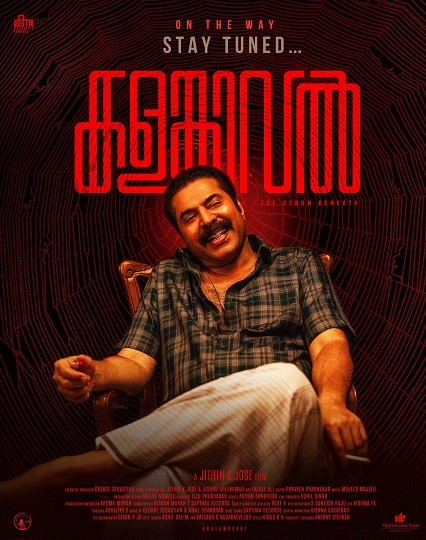
The two stars of the show are Mammootty (perhaps one of the finest performances of the year for me) and Vinayakan, a classic case of an anti-casting that is for everyone to witness and study. In any other world, the role of the antagonist would have been handed to Vinayakan, while the role of the protagonist would have been handed to Mammootty. But when the casting is reversed, you see a rather assured Vinayakan representing the role of Jayakrishnan with utmost sincerity and urgency, using his body language to convey a lot of emotions. You also see the charm of Mammootty coming through in a character (poles apart from the starry image that most superstars would wish to maintain) that remains complex. The subtle change of his expressions are enough to switch the context and mood of the scene, even as he lets off his sinister smile that remains a nod to his character in Munnariyippu (2014). I for one was infuriated with his antics which accounts for his brilliance here. On a side note, he even gives a character arc to the cigarettes that he smokes, almost chewing the stick in one scene after strangling a character. If this isn’t a collective acting masterclass, than what is?
Despite executing a seemingly predictable plot, Kalamkaval is a gripping serial-killer police procedural in a Mammootty-Vinayakan acting masterclass that makes for a brilliant watch. In the midst of the Dhurandhar wave, it is the Malayalam Film Industry once again that has quietly dropped another banger of a film! Available in a theatre near you and Highly Recommended!


